Dialing in in 5 shots: how to read your espresso
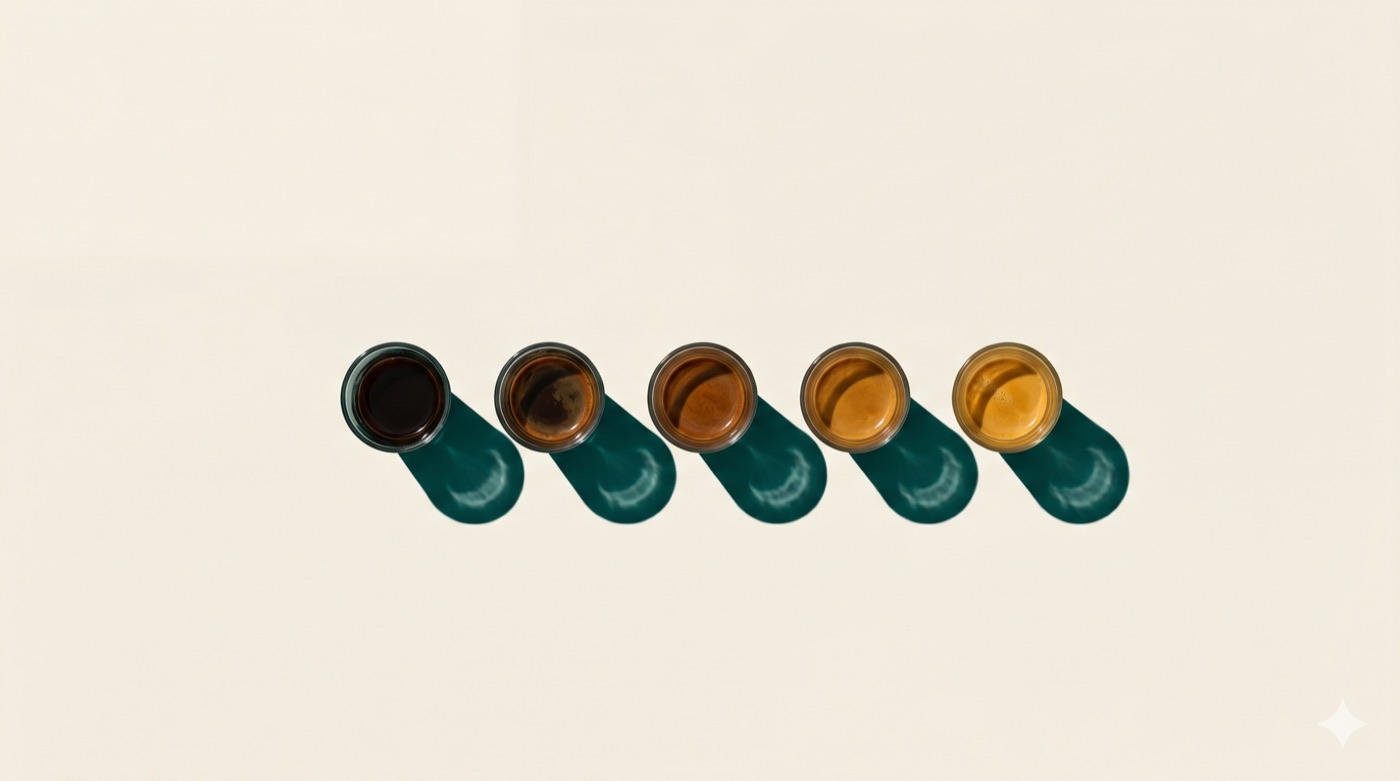
You have a nice machine, fresh beans, and still that first shot goes wrong: too sour, too watery, or bitter and dry instead. That’s not your fault — it’s just the nature of espresso. Every bean, every grinder and every machine needs adjusting. That adjusting is called dialing in, and the good news is: you usually only need five shots for it.
What is dialing in?
Dialing in is the process of tuning your grind size, dose and flow time to each other until the coffee tastes the way you want. You change one variable at a time, taste the result, and adjust. Don’t see it as a test you can fail, but as a conversation with your coffee: every shot tells you something.
The main dial is your grind size. A finer grind slows the water down and raises extraction; a coarser grind speeds it up and lowers extraction. You solve almost every flavor problem with this one dial.
Start from a starting point
Guessing costs you half a bag. That’s why we print a recipe on every EasyBeans bag: the point we landed on when we dialed in the batch. That’s where you start, instead of from zero.
Want this tuned to your machine and grinder? Enter your setup at Your starting point and you get a recipe that even moves with the age of your beans. Have a Sage Barista Express, Rancilio Silvia, Gaggia Classic Pro Evo, Lelit MaraX or De’Longhi La Specialista Arte? Then the recipe is already waiting for you.
The five shots
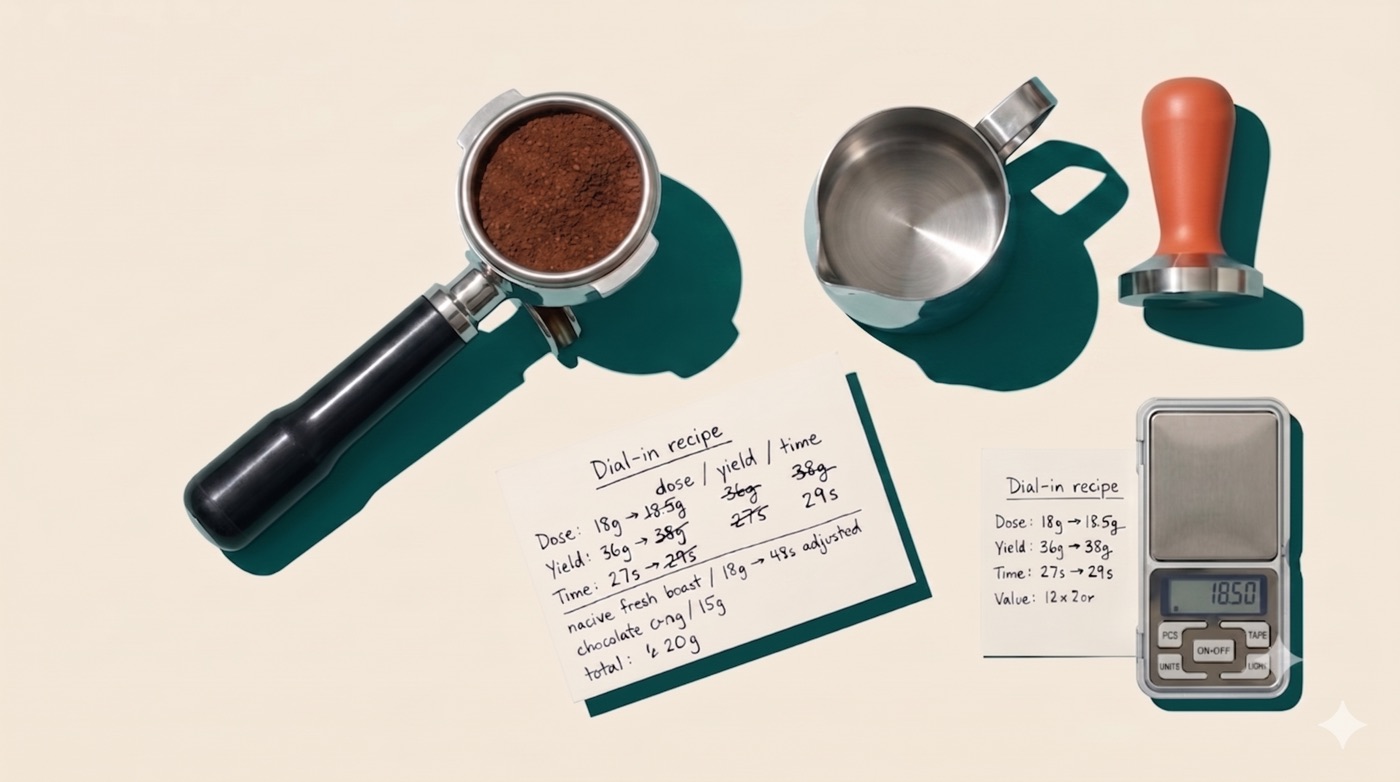
Grab a scale and a timer. Weigh your dose, weigh what goes into the cup, and time from the first drop. Then work as follows:
- Shot 1 — calibrate. Follow the starting-point recipe exactly. Taste. Write down what you taste: sour, bitter, or balanced?
- Shot 2 — coarse adjustment. Too sour and fast? Grind two steps finer. Too bitter and slow? Two steps coarser.
- Shot 3 — fine adjustment. You’re close now. Change one more step in the grind and taste again.
- Shot 4 — fine-tune yield. Flavor mostly right? Play with the yield: a little more for sweetness, a little less for body.
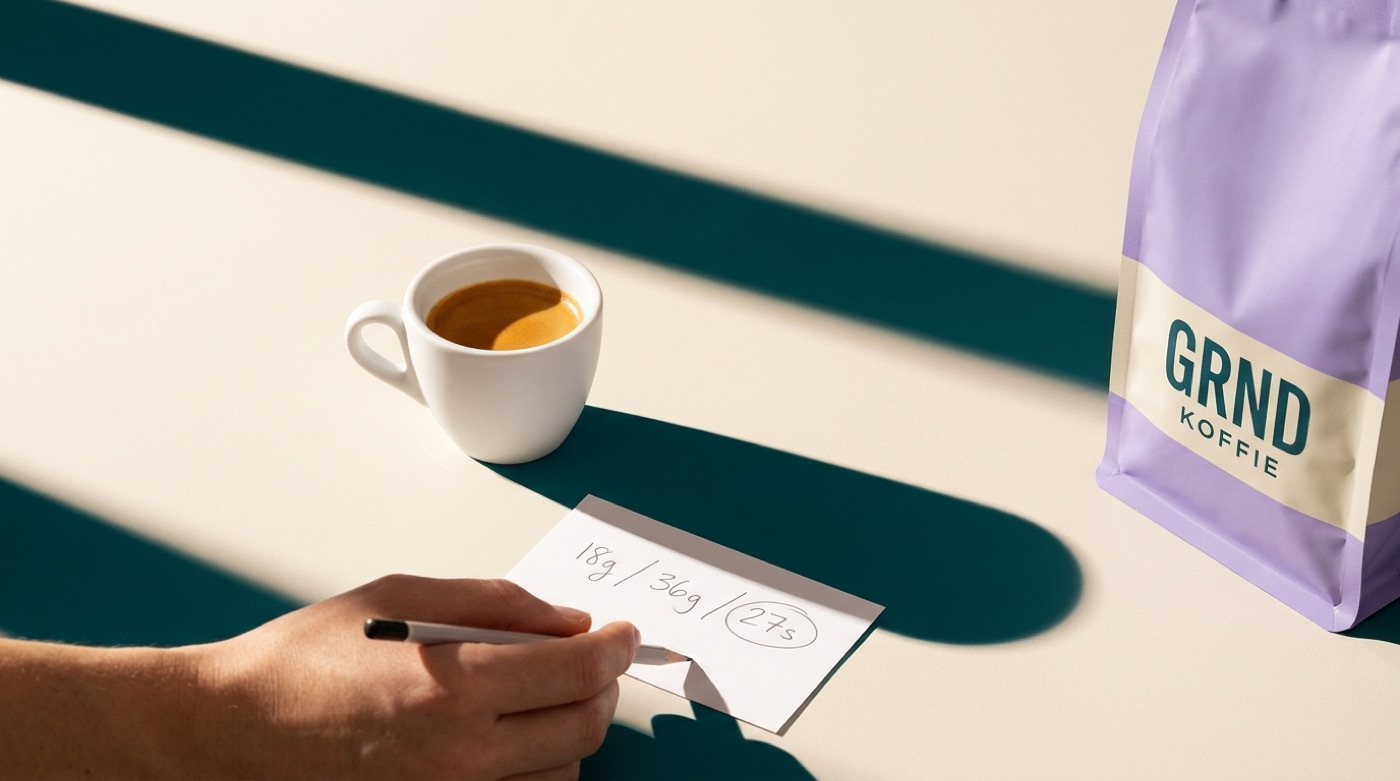
- Shot 5 — lock it in. Good? Note your grind, dose, yield and time. That’s your recipe for this bag.
Only ever change one variable per shot. If you adjust grind and dose at the same time, you’ll never know what made the difference.
Taste-to-action table
This is the heart of dialing in: translating what you taste into what you do. Print this table and hang it by your machine if you like.
| What you taste | What it means | What you do |
|---|---|---|
| Sharp, sour, lemony | Under-extraction | Grind finer |
| Bitter, dry, ashy | Over-extraction | Grind coarser |
| Thin, watery | Dose too low or too fast | More dose or finer |
| Empties in 15 s | Far too coarse | Much finer |
| Barely a drip | Far too fine | Much coarser |
Common mistakes
Not weighing
Dialing in by eye is guessing with extra steps. A scale for a few tens of euros is the cheapest upgrade in your whole setup.
Changing too much at once
It’s tempting to overhaul everything after a bad shot. Don’t. One variable, taste, next.
Not resting fresh beans
Freshly roasted beans are still degassing and run unevenly. Give them a few days, or grind a touch coarser.
Frequently Asked Questions
How many shots does it take to dial in a new coffee?
With a good starting-point recipe you’re usually there within three to five shots. If you start from zero with no reference, it often costs eight to ten shots and half a bag of coffee. That’s why EasyBeans includes a measured starting point with every bag.
What do I do if my espresso is too sour?
A sour, sharp espresso points to under-extraction: too little has been pulled from the coffee. The fastest fix is to grind finer, so the water runs more slowly through the puck. If that doesn’t help enough, raise the yield or the brew temperature by a degree.
Why does my recipe change as the beans get older?
After the roast date, coffee beans gradually degas. Fresh beans run faster and more unevenly; older beans call for a finer grind and sometimes a higher temperature to bring the sweetness back. The recipe at Your starting point adjusts automatically to the number of days since the roast date.
Do I need an expensive grinder to be able to dial in?
A good grinder helps more than an expensive machine, because grind size is your main flavor dial. But you can learn to dial in perfectly well with an entry-level grinder or a hand grinder — as long as you grind consistently and change one variable at a time.