The most common mistake people make with home espresso
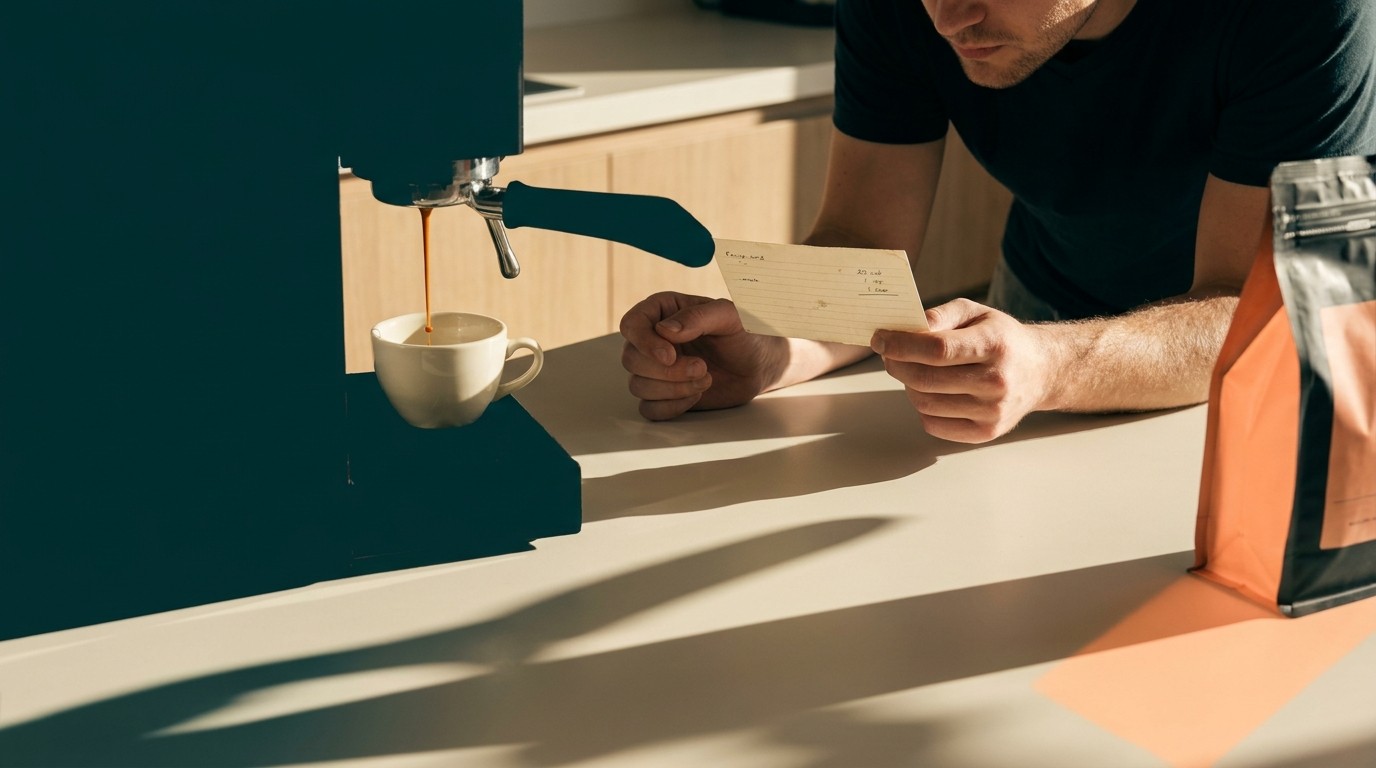
Almost every home barista makes the same mistake in the first few weeks: changing too much at once. It’s a logical mistake, and you unlearn it quickly.
The mistake almost everyone makes
You pull a shot. It’s too sour and runs too fast. So for the next attempt you set the grind finer, add half a gram of coffee and let the shot run on feel. The result is different, maybe even better, but you have no idea why. The next morning you start guessing all over again.
This is the most common mistake: adjusting several variables at the same time. It’s a logical reaction, because with espresso everything is connected. The grind size affects the flow time. The amount of coffee affects the resistance. The yield affects the flavor. Precisely because they are so intertwined, you won’t get there by turning all the knobs at once. This happens to everyone, including people with an expensive machine and a professional grinder. It’s not a lack of talent, but a lack of method.
First lock down what you can lock down
The solution is to switch off variables temporarily. That creates calm and clarity. You turn a complex problem with five knobs into a simple problem with just one knob.
Start by locking down your recipe.
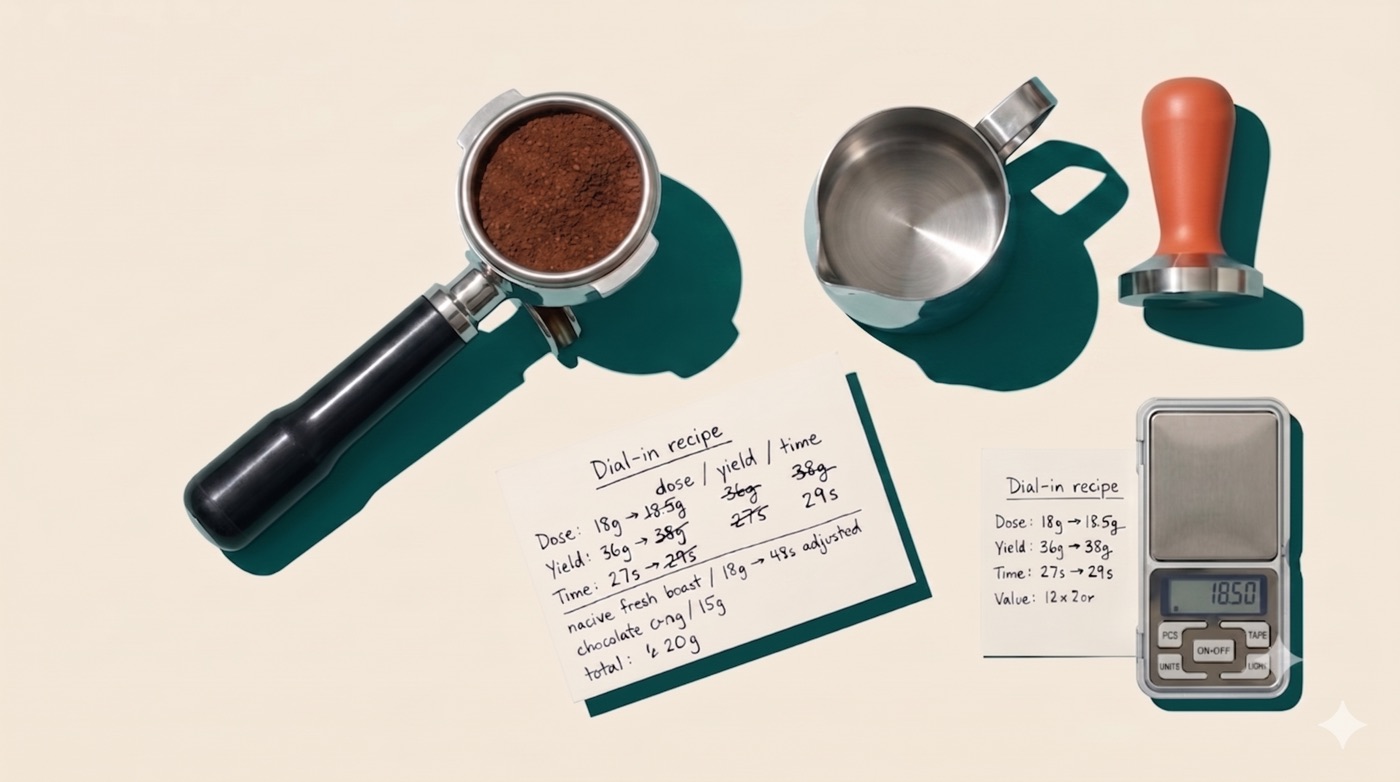
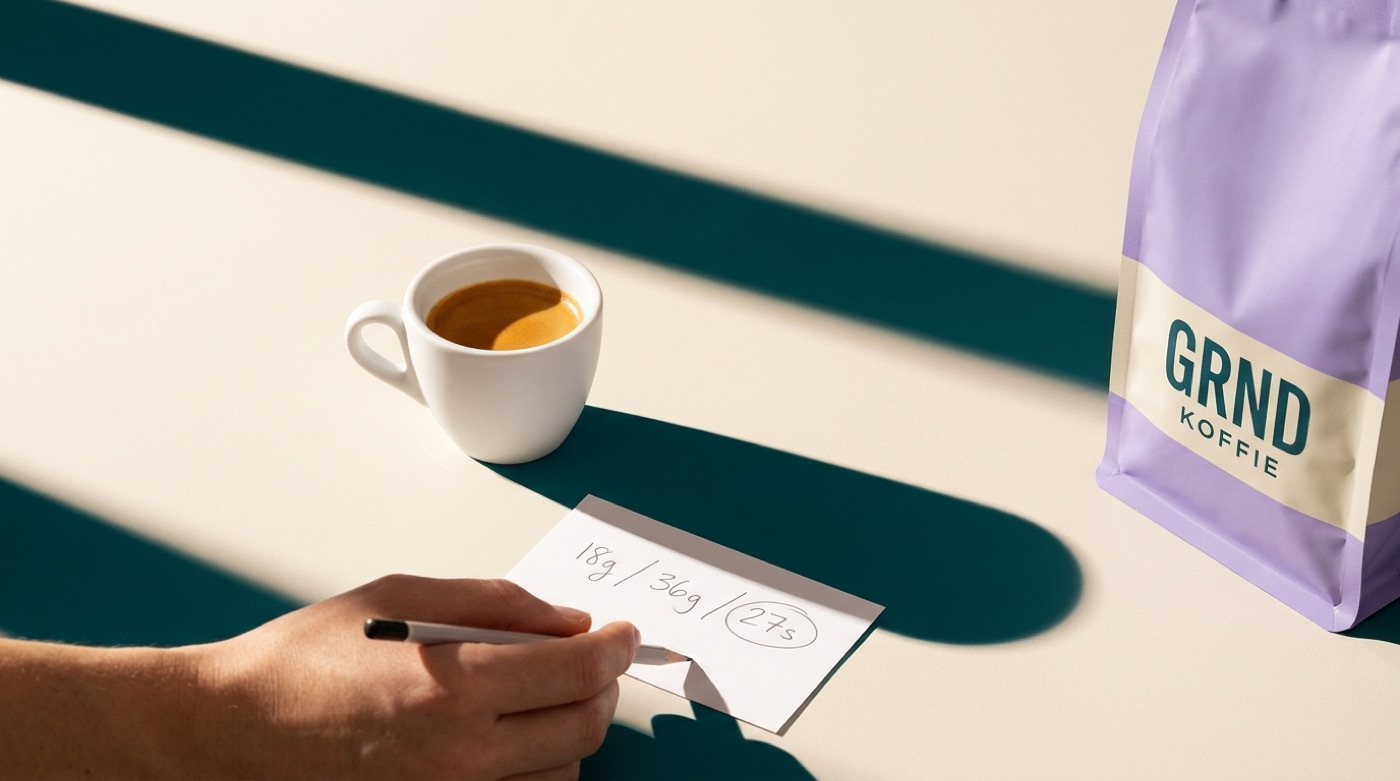
- Pick one dose. A dose is the amount of ground coffee in your portafilter. Let’s take 18 grams as an example. Weigh this every time and stick to it for the coming days.
- Pick one target yield. The yield is the weight of the liquid espresso in your cup. A ratio of 1 to 2 is a safe starting point. With 18 grams of coffee your target yield is therefore 36 grams of espresso.
- Use water straight from the tap. Water temperature and composition matter, but not for now.
Now you have just one variable left to adjust: the grind size. Everything else is fixed.
Change one thing at a time, in this order
The grind size is your main steering wheel. It largely determines how fast the water flows through the coffee. Your goal is to reach your target yield of 36 grams in a time between 25 and 32 seconds.
Start with a shot. Does it run too fast, say in 18 seconds? Set your grinder one step finer. Touch nothing else. Does it run too slow, say in 40 seconds? Set your grinder one step coarser. Repeat this process until the flow time falls within the 25 to 32 second range.
Is the time right, but the flavor still off? Only then do you move to the next variable: the yield. Leave the grind size alone.
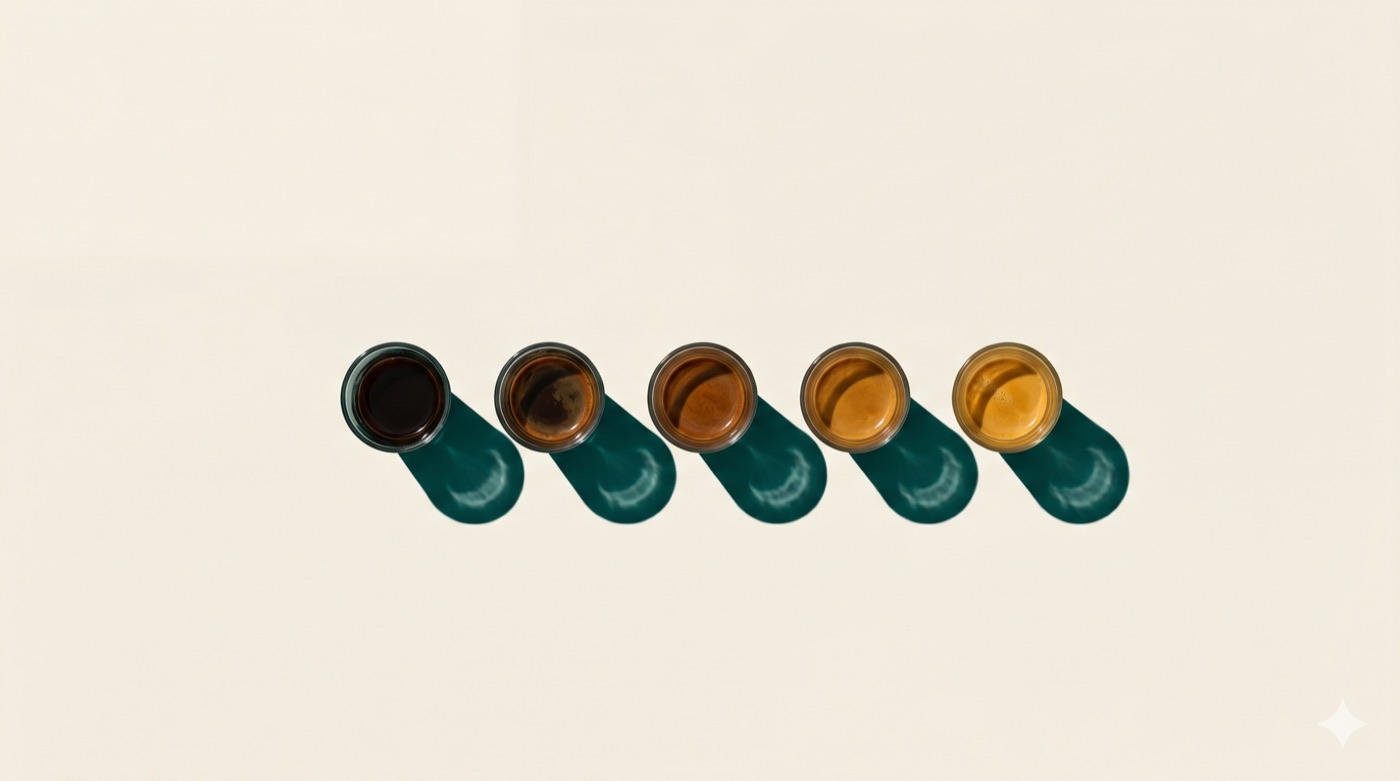
- For a sour flavor let the shot run a few grams further, say to 38 or 40 grams. Sour often points to too little extraction.
- For a bitter flavor stop the shot a few grams earlier, say at 34 or 32 grams. Bitter is a sign of too much extraction.
We explain the basics of this flavor diagnosis in our article on espresso too sour or too bitter. Variables like dose, temperature and puck prep come only after that. You’ll find the full method with all the details in our complete guide to dialing in espresso.
Write down every shot
Your head is a bad place to store data. So write down every attempt. Note the bean, the grind setting, the dose in grams, the yield in grams, the flow time in seconds and the flavor in three words.
After three or four noted shots you’ll see a pattern you would never have remembered in your head. You see straight away what a small adjustment does to the result. The first few weeks will include some less good shots. That’s normal. Once you write them down, they become clues instead of waste. You learn from every cup. You don’t need a special app or an expensive scale. A simple kitchen scale, a note card and a pen are enough.
Not sure which variable you’re missing?
If after a few days you still don’t know which variable is the problem for you, we have a quick way to find out. Our diagnosis asks you six questions about your machine and your coffee. In three minutes you know what level you’re at and you get a concrete starting point for your setup. Do the diagnosis whenever it suits you.
Every bag of EasyBeans also comes with its own dial-in card. That’s a tested dialing recipe you can use as a starting point for that specific bean. So you never start from zero.
Frequently Asked Questions
What do I change first?
The grind size. It has the biggest effect on how fast your shot runs. Leave the dose and the yield at the values you picked for now.
How much do I adjust per shot?
One step on your grinder per shot. If your grinder has no clear clicks, make a quarter turn. Small, patient adjustments give the clearest result.
The time is right, but it tastes sour. Now what?
Leave the grind size alone. You can try two things. Let the shot run a few grams further for more extraction, or set your water temperature a little warmer if your machine allows it. Sour usually means too little extraction.
Do I need a separate scale or an app?
No. An ordinary kitchen scale that measures grams and a card to write on is all you need to learn systematically. The method matters more than the tools.
See also: Espresso too sour or too bitter? Here’s how to fix it, Dialing in espresso: the complete guide, Dialing in in 5 shots: how to read your espresso