Dialing in espresso: why your good shot disappears and how to get it back
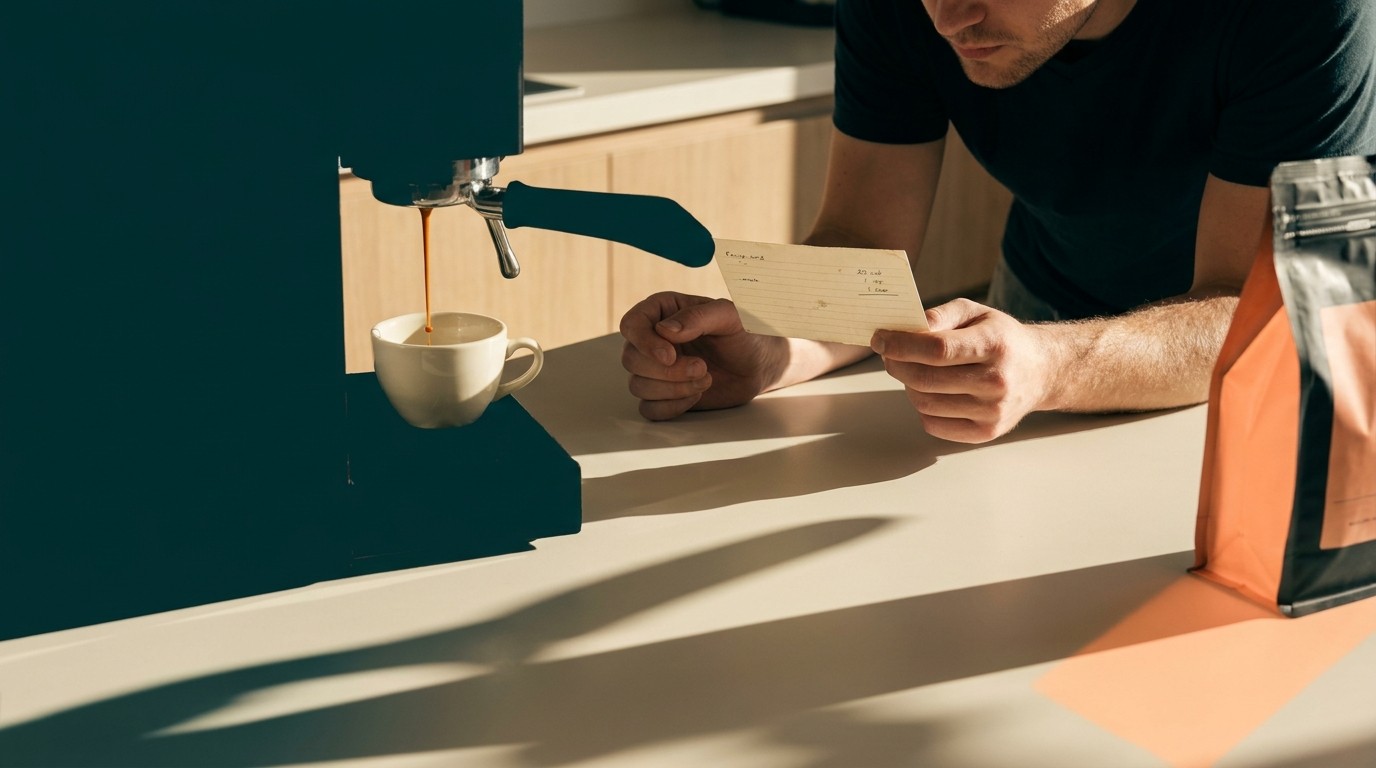
You had it. That one shot. Perfectly balanced, sweet, without the harsh bitterness. The next morning you do everything exactly the same. You think. But the flavor is gone. The espresso is sour, or bitter instead. It’s the frustration of dialing in espresso. You have no control, only chance. This article explains what was right that one time — and why writing it down beats trying to remember.
Why your shot is off when you changed nothing
You think you changed nothing. Yet the outcome is different. The cause is in the details. Your dose was 18.3 grams, now it’s 17.9. Your grind shifted a fraction. The flow time was three seconds shorter. Each deviation is trivial. Together they make a different shot.
The brain doesn’t remember precision. It remembers “about 18 grams” and “about 28 seconds.” That’s not enough for a repeatable result. A shot that came out well on its own is not a system. It’s a lucky accident.
Dialing in espresso: the variables that really matter
Six variables determine the flavor in your cup. They work together. Adjust one and the rest shifts with it.
Roast date of the bean A fresh bean (5–14 days after roasting) contains more CO₂. This gas affects extraction and calls for different settings. The same bean needs a finer grind after 21 days to hit the same flow time. Baristas call this ‘dialing on freshness’ — the point where all the settings meet the state of the bean.
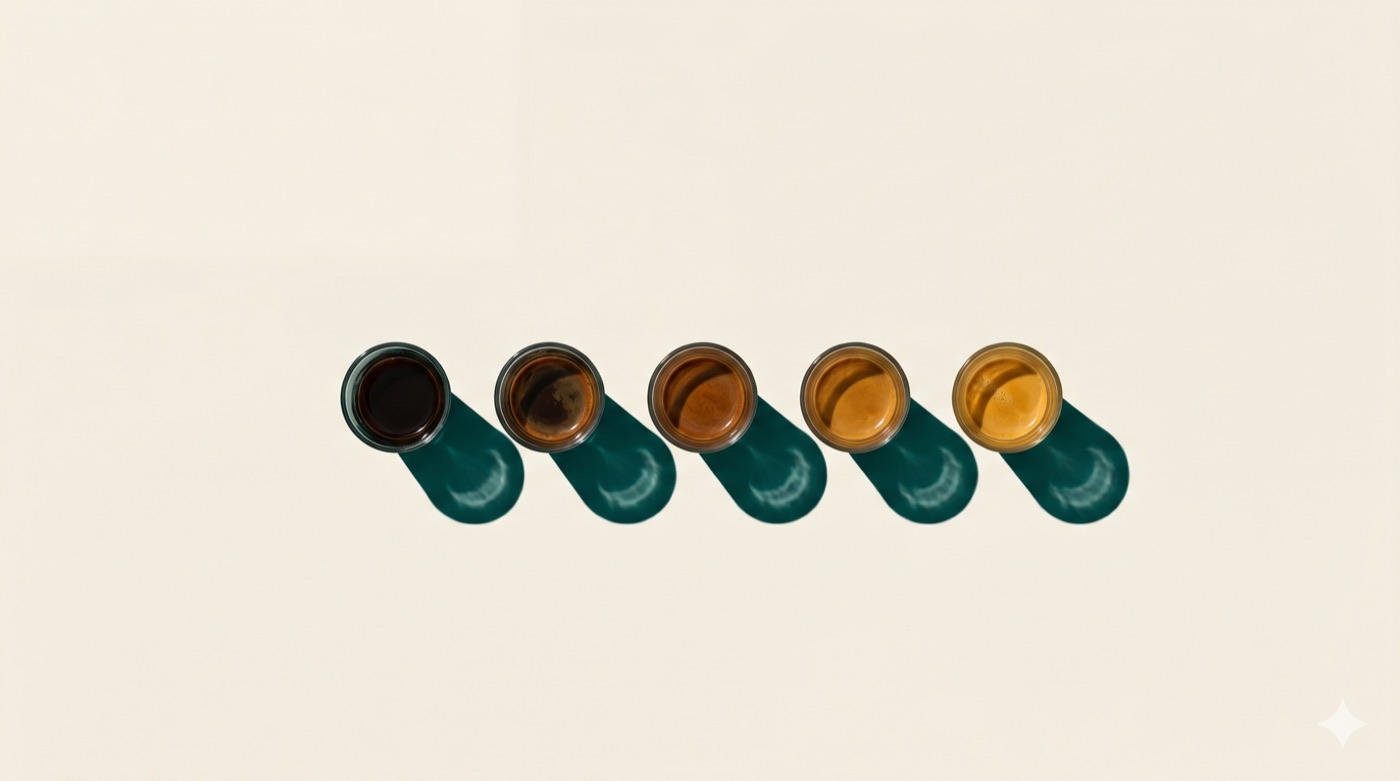
Grind size This is the most impactful variable. A small adjustment has a big effect. Too coarse gives a fast, sour shot. Too fine gives a slow, bitter shot.
Dose (grams in) This is the amount of ground coffee in your portafilter. You can taste half a gram of difference. Estimating with a scoop doesn’t work. Always use a scale to set the exact dose.
Yield (grams out) This is the amount of espresso in your cup. The relationship between dose and yield is what we call the ratio. A 1:2 ratio is standard: 18 grams in, 36 grams out. Here too, always use a scale to set the exact yield.
Water temperature and water quality The ideal temperature sits between 91 and 94°C. Hard water can slow extraction and cause limescale.
Extraction time This is the time your shot needs to run through. A guideline is 25 to 30 seconds. But flavor matters more than the clock. Every bean brews differently — extraction time is the outcome of the other variables, not a variable in itself. The first shot that tastes good is a first indication you can build on.
How to pull the same shot again tomorrow
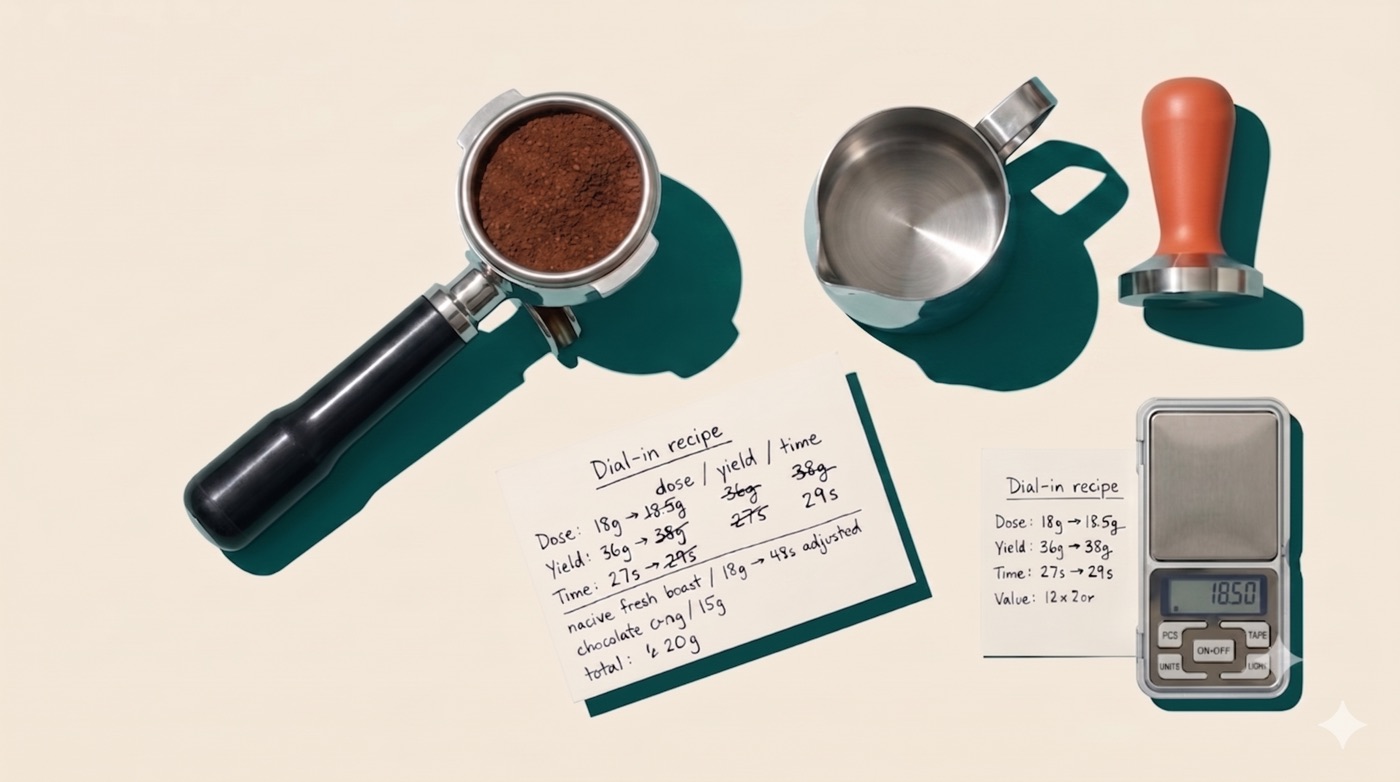
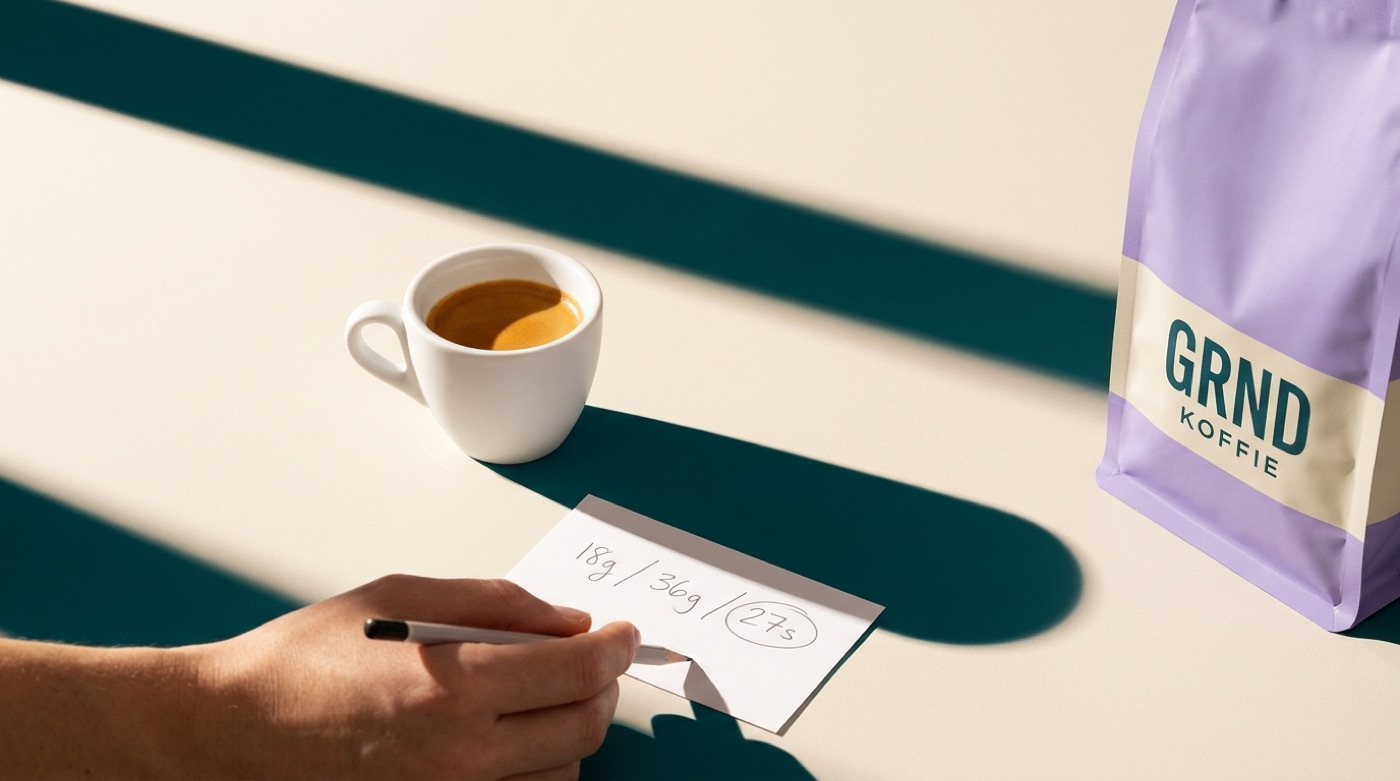
The solution is simple: write down three numbers. Dose. Yield. Extraction time. When you have a good shot, note this data.
If those three numbers are right, you don’t start from zero tomorrow. You start at your best shot. With a new bag of coffee the roast date is different. Start with a slightly coarser grind than your previous final setting.
EasyBeans includes a dial-in recipe with every bag. It’s a starting point, tuned to common home setups. It’s not a law, but a beginning. From there you adjust to taste. When it’s right, you know why. It’s that simple.
It’s not just about the perfect shot. It’s about the process behind it, so it works again the next morning.
EasyBeans delivers fresh specialty beans with a dial-in recipe tuned to your machine. See the starting-point recipe.
Frequently Asked Questions
How long does it take to dial in espresso properly?
The first time it costs you 3 to 5 shots. After that you start from your previous notes. With a starting-point recipe, like the EasyBeans dial-in recipe, you’re already close on the first shot. From there you only adjust to taste.
How many grams of coffee do I use for a double espresso?
A standard starting point is 18 grams in the portafilter for 36 grams in the cup, in 27 to 30 seconds. The EasyBeans dial-in recipe gives a specific starting point for the most common home setups, tuned to the bean.
Why does my espresso taste different every day?
The small variables are never exactly the same: dose, extraction time, grind size. By writing them down, you have a fixed reference point. The roast date of your bean plays a part too. After two or three weeks the bean calls for different settings.