Why does your espresso taste harsh or dry?
You pull a shot that looks fine. The first sip isn’t even bad. But then comes that aftertaste: a dry, harsh feeling that clings to your tongue and gums. It’s not exactly bitter or sour, but it’s unpleasant and it ruins the experience. This is one of the most common problems every home barista runs into.
What astringency actually is
That dry, puckering feeling in your mouth is called astringency. It’s not a flavor, like sweet or salty, but a tactile sensation, part of the broader mouthfeel of your espresso. Think of a cup of black tea that has steeped far too long. Or the rough texture an unripe banana leaves in your mouth. That’s exactly what’s happening on your tongue.
Astringency is caused by a group of chemical compounds called tannins. These bind to the proteins in your saliva, which makes your mouth feel dry and rough. It’s a physical reaction, not a flavor you taste. That’s why an espresso can feel harsh even when the flavors themselves seem reasonably balanced.
The cause: over-extraction
The culprit behind a harsh espresso is almost always over-extraction. During brewing, the hot water dissolves all kinds of flavor and aroma compounds out of your ground coffee. This process, extraction, follows a predictable order. First come the fruity acids and the liveliness. Then follow the sweet, round flavors like caramel and chocolate.
If the water is in contact with the coffee too long, it also starts pulling out the last, less pleasant compounds. These are the heavy, bitter substances and the tannins that cause astringency. You’re essentially wringing the coffee puck completely dry, down to the last drop. The result is a cup of coffee that isn’t just bitter, but also gives that sandpaper feeling.
What your grinder and brew time have to do with it
Over-extraction usually happens through two factors that are directly related: too fine a grind or too long a flow time. If you grind your coffee too fine, you create a very dense mass in your portafilter. The water has to force its way through. As a result the contact between water and coffee lasts too long.
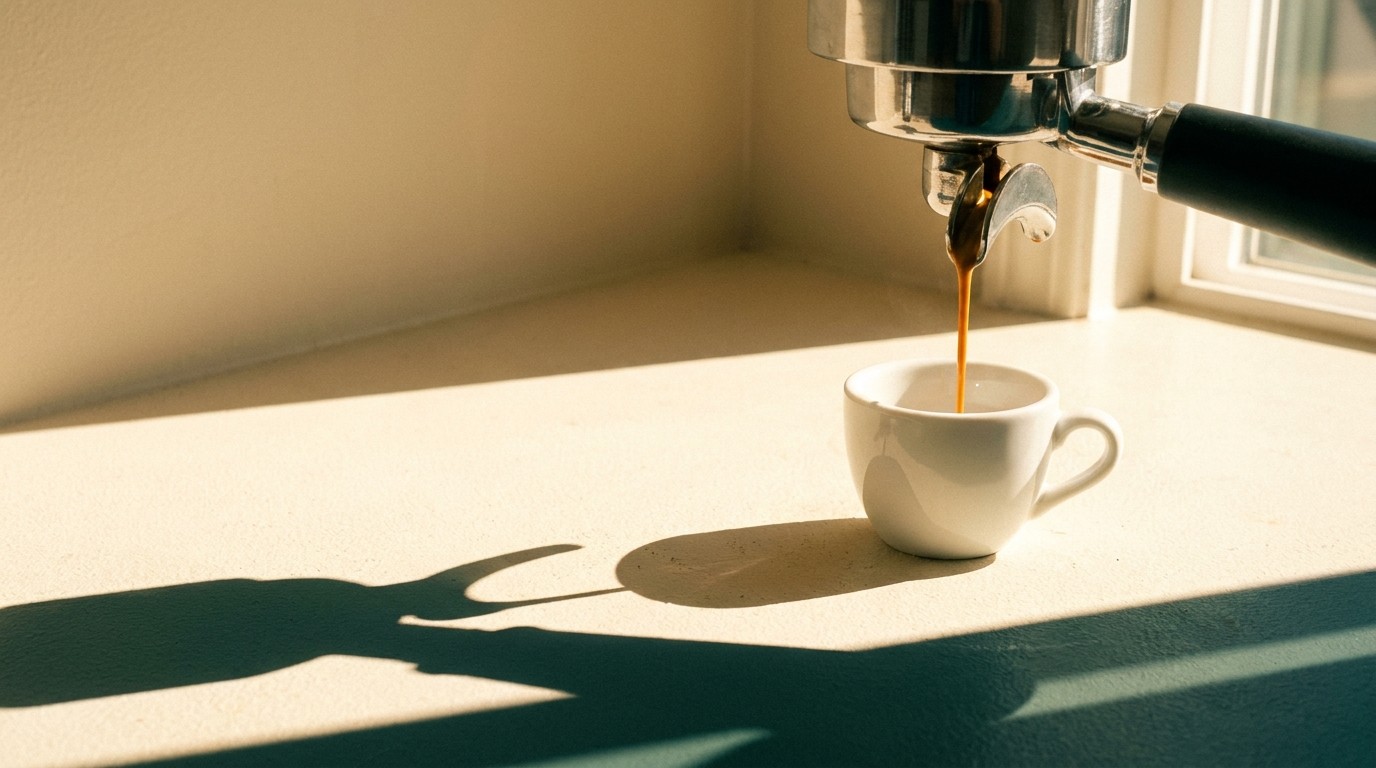
You recognize this straight away from your shot. Instead of a nice, steady stream you see the espresso dripping very slowly. A shot that takes 45 seconds instead of the target 25 to 30 seconds is a clear sign of over-extraction. The water has had too much time to pull all the compounds, including the unwanted ones, out of the coffee. The espresso tastes harsh and feels hollow.
How to fix it
The solution for astringency is fortunately logical: you need to shorten the contact time between the water and the coffee. The most effective way to do this is to grind your coffee a little coarser. This lets the water flow more easily through the coffee puck, which shortens the flow time.
Start with small adjustments. Set your grinder just one or two steps coarser. Then pull a new shot and see what happens to the time. The most important thing is to always change one variable at a time. If you adjust the grind, keep your dose of coffee and your yield in the cup the same. That way you can be sure the effect comes from the grind adjustment. A good starting point, like the dial-in recipe with your coffee, gives you a solid base to work from.
Frequently Asked Questions
What’s the difference between harsh and bitter?
Bitter is one of the five basic tastes, similar to the taste of dark chocolate or tonic. Harsh (astringency) isn’t a flavor, but a physical, dry and puckering feeling on your tongue. They often go together in an over-extracted espresso, which can cause confusion. Try to tell them apart: bitterness you taste, harshness you feel.
Is a harsh flavor down to the coffee bean?
In most cases, no. Almost any specialty coffee can taste balanced and sweet. A harsh flavor in your espresso almost always comes from the way it’s brewed, not from the bean itself. It’s a signal that your recipe isn’t quite right for that specific coffee. It’s not a bad bean, but a wrong preparation.
How quickly do I notice the effect of an adjustment?
Immediately. The next espresso you pull after adjusting your grind will flow differently and taste differently. Espresso gives you instant feedback on what you do. That’s useful, because you know right away whether you’re heading in the right direction. It also means small adjustments can make a big difference.
In closing
A harsh espresso isn’t a failure. It’s just data. It tells you exactly what to do differently next time to get the extraction better into balance. Every home barista makes these shots, we do too. It’s part of the process of getting to know your machine, your grinder and your beans. Use your dial-in recipe as a compass and see every adjustment as a step closer to a delicious, balanced shot. You’re almost there.
See also: Coffee mouthfeel: the variable nobody explains, Thin or full espresso: what determines the body?, Espresso too sour or too bitter: causes and fixes