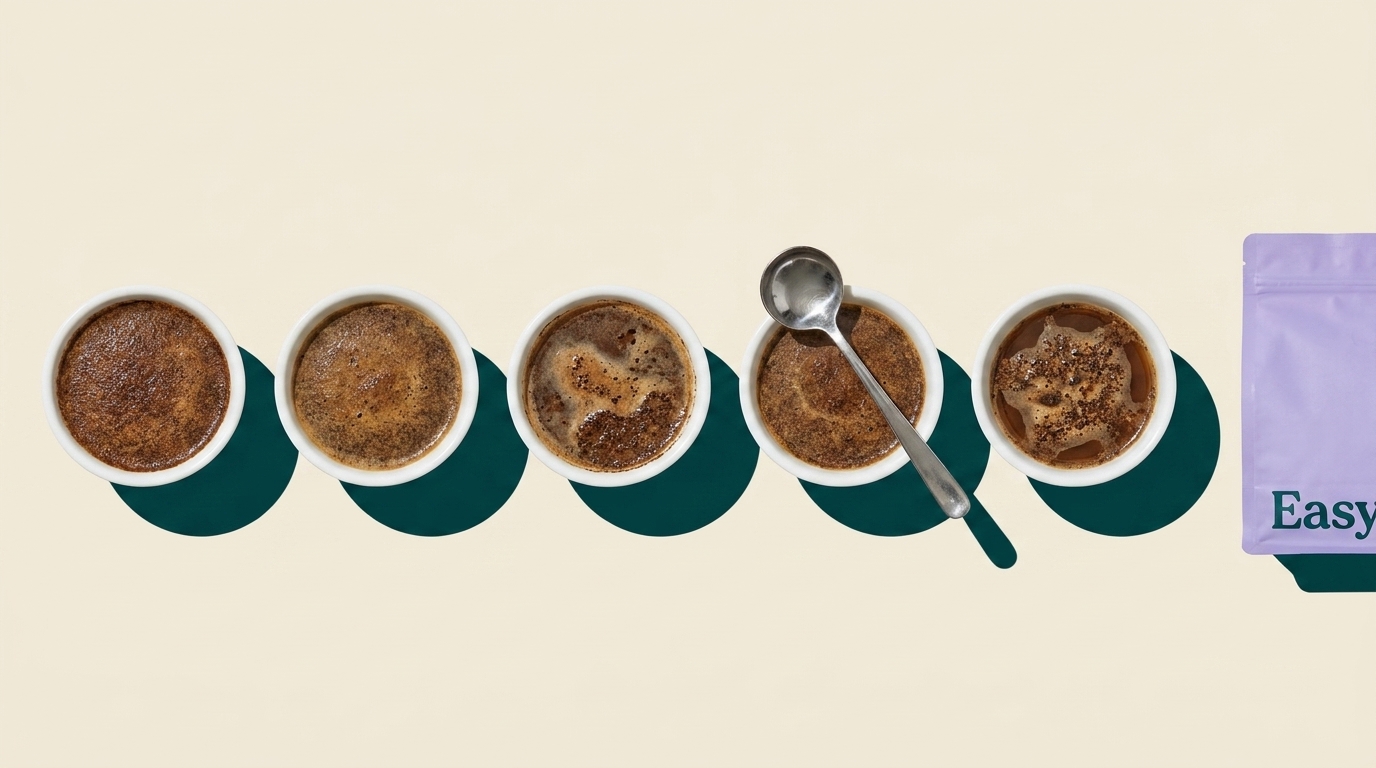
Coffee mouthfeel: the variable nobody explains

You did everything the same. Same beans, same grind, same flow time. Yet one espresso feels full and creamy, while the other is thin and short on flavor. This isn’t chance. This is mouthfeel: the physical sensation of the coffee in your mouth, before your brain even recognizes the flavor. It’s built from separate variables you can learn to steer one by one.
What mouthfeel actually is
Mouthfeel is the texture of your coffee. It’s the weight, the thickness and the feel on your tongue, completely separate from the flavors you taste. Think of the difference between water and whole milk. Both have a neutral flavor, but they feel totally different. That difference is mouthfeel. In espresso this is a crucial but often ignored variable. Many home baristas focus purely on flavor and see texture as a lucky side effect. A shame, because you can influence the body of your espresso just as deliberately as the flavor. It’s a combination of six elements: temperature, viscosity, crema, fat, particles and the unwanted guest called astringency. Let’s look at them one by one.
Temperature changes what you taste
The temperature of your espresso has a direct influence on how you perceive flavor and texture. A shot that’s too cold often feels thin and tight. The cold numbs your taste buds a little, so you miss the sweetness and complex aromas. The result is a somewhat flat, sometimes even sour experience. A warm espresso does the opposite. The warmth makes the liquid slightly less viscous and helps the aromatic oils evaporate. That way you smell and taste more. The sweetness comes forward and the coffee feels rounder and more pleasant. A simple but effective tip: always preheat your cup. Pouring an espresso into a cold porcelain cup is the fastest way to turn a nice, warm shot into a lukewarm disappointment.
Viscosity determines how long the flavor lingers
Viscosity sounds technical, but it’s simply the thickness or syrupiness of your espresso. This is a core part of a good body in your espresso. A shot with low viscosity feels watery and thin. The flavors are there briefly, but disappear as soon as you swallow. It’s a short, direct experience. A shot with high viscosity feels heavy and syrupy instead. The film of coffee stays on your tongue longer, which extends the finish and lets the flavors unfold more slowly. What controls this? The amount of dissolved coffee particles. The more solids you manage to extract from the ground coffee and dissolve in the water, the higher the viscosity. A well-tuned grind and extraction therefore delivers not only a better flavor, but literally a heavier, richer shot.
Crema is more than a layer of foam
Many people see a thick layer of crema as the sign of a good espresso. That’s only half the story. Crema is an emulsion of coffee oils and carbon dioxide (CO2), the gas released by freshly roasted beans. Those small gas bubbles do two things to your mouthfeel. First, they lift volatile aromatic compounds up to your nose, which adds to the total flavor experience. Second, they give a light, almost tingling texture. A shot with a lot of fresh, foamy crema can therefore feel a bit drier or even slightly sharp. As the crema dissolves, the espresso becomes softer and rounder. A thick crema is mostly a sign of fresh beans, but no guarantee of a balanced mouthfeel. Sometimes a thinner, finer crema is actually more pleasant.
Fat adds roundness and length
Coffee beans naturally contain oils. During extraction, these fats are emulsified into the espresso, which has a crucial effect on mouthfeel. These oils coat your tongue and palate, creating a soft, round feeling. It’s similar to the difference between low-fat and full-fat yogurt: the fat adds a creamy texture and richness. This effect is even clearer in milk drinks. The fat in the milk reinforces this round feeling and lengthens the aftertaste considerably. The coffee oils themselves keep the flavors lingering longer and give the finish a pleasant, soft ending. Without these fats, an espresso would feel much harder and shorter in flavor.
Particles add weight
Even with the best grinder and espresso machine, tiny insoluble coffee particles always come through your basket. These particles, also called ‘fines’, float in the liquid. They add no flavor, but they do add texture and weight. Compare it to the difference between clear and cloudy apple juice. The cloudy juice feels fuller and more substantial thanks to the suspended fruit particles. Exactly the same thing happens in your espresso. A shot with more of these particles feels heavier and has more body. Too fine a grind can lead to an excess of particles, which can give a muddy or gritty feeling. But the right amount adds to a rich and complex mouthfeel that a filtered coffee can never match.
Astringency is the variable you want to avoid
Where the previous five variables are instruments to play with, astringency is the wrong note you want to avoid. Astringency is that dry, puckering and harsh feeling on your tongue. It feels as if all the moisture is being sucked out of your mouth, similar to drinking a far too strongly steeped cup of black tea or biting on a grape seed. This feeling is caused by over-extraction. When your water is in contact with the coffee too long, or when the grind is too fine, you start pulling unwanted, bitter and dry compounds (polyphenols) out of the coffee. It’s a clear signal from your machine that something isn’t right in your recipe. Does your shot feel dry and rough? Then chances are you need to shorten the flow time or set the grind a little coarser.
Frequently Asked Questions
What’s the difference between mouthfeel and flavor?
Flavor is what your brain identifies as specific notes, like chocolate, citrus or nuts. Mouthfeel is the purely physical sensation in your mouth: the texture, the weight and the temperature. Flavor is the ‘what’, mouthfeel is the ‘how’.
Does a thick crema always say something about quality?
No, not necessarily. A thick crema mostly indicates that the beans are fresh and contain a lot of CO2. Robusta beans, for example, produce much more crema than Arabica beans, but that says nothing about the refinement of the flavor. Quality is in the balance of the whole shot, not just the foam layer.
Can I adjust the mouthfeel without buying different beans?
Absolutely. Adjusting your grind, dose and flow time has a huge impact. A slightly finer grind, for example, can deliver more particles and a higher viscosity, resulting in a fuller body. Experiment with these variables to see how you can steer the texture of your espresso.
In closing
Mouthfeel isn’t chance, but the result of a series of steerable factors. By deliberately paying attention to temperature, viscosity, crema, fats, particles and astringency, you move from a random outcome to a deliberate process. These are exactly the variables you work with when dialing in an espresso. When you read about body or texture in the dial-in recipe with a bag of EasyBeans, you now know exactly which dials to turn to get that feeling in your cup.
See also: Why does your espresso taste harsh or dry?, Thin or full espresso: what determines the body?, Espresso too sour or too bitter: causes and fixes