Temperature surfing on the Rancilio Silvia and Gaggia Classic Pro
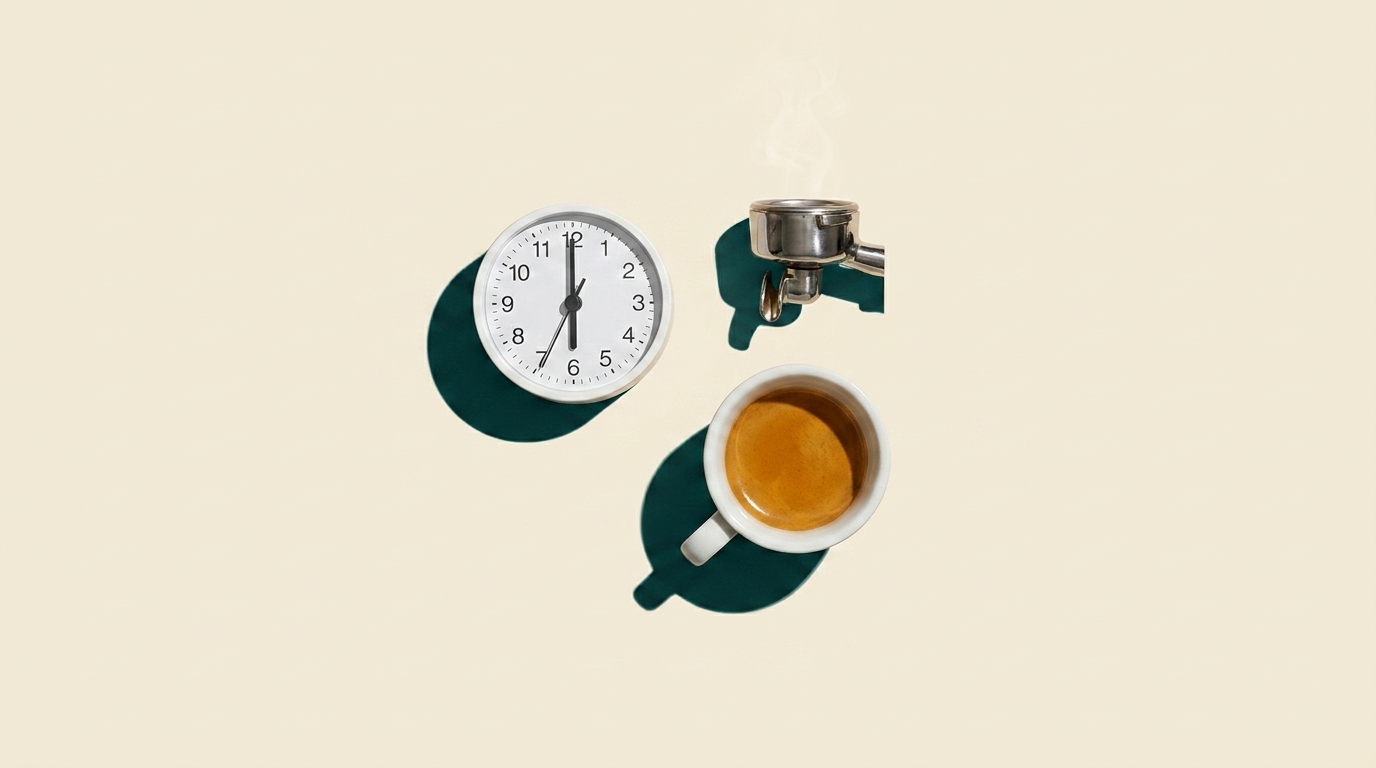
Your Rancilio Silvia or Gaggia Classic Pro has no digital thermostat. That means the temperature of the water in the boiler swings constantly. Sometimes it’s too hot, sometimes too cold. This is a major cause of inconsistent espresso. One shot is bitter, the next is sour, even though you feel like you’re doing exactly the same thing.
Fortunately, you can control that swing yourself. The technique for it is called temperature surfing. It’s a well-known and reliable method for learning to time when you start the extraction, precisely at the moment the water is at the right temperature.
This article explains how to apply this technique on the Rancilio Silvia and the Gaggia Classic Pro Evo. It gives you a fixed, repeatable routine for a predictable result in your cup.
Why your boiler has a cycle
An espresso machine with a PID, like the Lelit MaraX or Sage Barista Express, controls the water temperature digitally. It holds the temperature stable within half a degree. There’s no need to temperature-surf there.
Your Silvia or Gaggia Classic Pro works with a mechanical thermostat. Compare it to the heating in an old house. It kicks in, heats the boiler to a peak temperature and then switches off. The boiler then cools slowly until it reaches a lower limit, after which the cycle starts again.
The light on your machine tells you where you are in that cycle. As soon as the light goes out, the boiler has reached its peak temperature. Then it starts cooling. When the light comes back on, the boiler is reheating.
If you pull a shot right after the light goes out, the water is too hot. Your espresso turns bitter, a sign of over-extraction. If you wait too long, the water is too cold. That gives a sour, flat espresso, a sign of under-extraction. Temperature surfing is the art of waiting for the right moment within that cycle.
Note: the De’Longhi La Specialista Arte in our catalog has a thermoblock instead of a boiler. This technique doesn’t apply to it.
Temperature surfing on the Rancilio Silvia
The Rancilio Silvia has a powerful boiler that can let the temperature overshoot significantly. This routine, based on measured data from the international coffee community, helps you tame that boiler.
- Preheat the machine well. Turn the machine on at least 30 to 60 minutes before use. A stable temperature throughout the whole machine is essential. A faster alternative is to run two double shots of water through the machine to warm everything up.
- Wait for the light to go out and start your timer. This is the starting point. The light goes out when the boiler reaches its peak of around 102°C.
- Do a cold flush at 30 seconds. After those 30 seconds the boiler has overshot to about 116°C. That’s too hot. Turn the brew switch on for 5 seconds to dump hot water and draw cold water into the boiler. You’ll now see a lot of steam. This cools the boiler down to around 110°C.
- Stop the flush and insert your portafilter. At 35 seconds, turn the brew switch back off. You now have about 15 seconds to lock your prepared portafilter into the group head.
- Start the extraction at 50 seconds. Turn the brew switch on and start your shot. The water temperature in the boiler is now in the target range of 92 to 95°C.
- Let the shot run for 25 to 30 seconds. The exact time depends on your grind and other variables.
- Give the boiler time to recover. After a shot, wait at least 10 minutes before repeating the routine for another espresso. That lets the temperature stabilize again.
Temperature surfing on the Gaggia Classic Pro Evo
The Gaggia Classic Pro Evo has a smaller boiler than the Silvia. The temperature cycle is therefore shorter and the approach slightly different. The key here is adjusting the waiting time to the roast level of your coffee beans.
- Preheat the machine and portafilter. Turn the machine on at least 20 minutes ahead. Lock an empty portafilter into the group head so it warms up fully too.
- Start the heating cycle. Put a cup under the group. Turn the brew switch on and let water run until the brew light comes on. Then turn the brew switch straight back off. This forces the start of a new, predictable heating cycle.
- Wait for the light to go out and start your timer. This is your starting point, just like with the Silvia. The boiler has reached its peak temperature.
- Choose your waiting time based on the roast. Now the timing begins. The desired temperature depends on how dark your beans are roasted.
- Light roast: wait 5 to 10 seconds. Lighter beans want hotter water.
- Medium roast: wait around 15 seconds.
- Dark roast: wait 20 to 30 seconds, to avoid bitterness.
- Insert the portafilter and start the extraction. At your chosen moment, lock the prepared portafilter into the machine and turn the brew switch on.
- Do a cooling flush after steaming. If you’ve steamed milk, the boiler is too hot for espresso. Run water through the group until it flows evenly and the light has cycled on and off once. Only then start the routine again from step 2.
- Remember: the goal is a fixed routine. It’s not about hitting an exact number on a thermometer. The goal is a repeatable workflow you can run the same way every time. Consistency is the key to a predictable result.
What this doesn’t replace
Temperature surfing controls the water temperature. It’s an important variable, but not the only one. The exact temperature can’t compensate for a wrong grind, sloppy puck prep or an incorrect dose.
That’s why you always start with the basics. Make sure your grind, dose and flow time are right. Temperature surfing is the technique you layer on top for extra consistency, not a replacement for your starting point.
Frequently Asked Questions
Do I need to do this on a machine with a PID?
No, that’s not necessary. A PID is a digital controller that actively keeps the boiler temperature stable. The machine already handles this for you, so temperature surfing is unnecessary.
Does this technique work on the De’Longhi La Specialista Arte?
No. The La Specialista Arte doesn’t have a boiler with a mechanical thermostat, but a thermoblock. That’s a different type of heating element, which heats water as it flows through. That machine has its own three-setting temperature control and needs a different approach.
My shot is still too sour or too bitter after these steps, now what?
Temperature surfing only solves the water-temperature variable. If your shot still doesn’t taste good after applying this technique, the cause is somewhere else. Think of your grind, your dose, the flow time or your puck prep. Read our guide on espresso that tastes too sour or too bitter for a full diagnosis.
In closing
Temperature surfing might look complicated, but it’s mostly a matter of learning a fixed routine. It gives you control over a machine that’s inconsistent by nature.
It turns the limitation of a mechanical thermostat into a predictable part of your workflow. It takes some practice, but it’s one of the most effective ways to take your espresso with a Silvia or Gaggia Classic Pro to a higher level.
Find the starting-point recipe for your setup here →
See also: Why your grinder matters more than your machine · Dialing in espresso: the complete guide