Soup shots: what they are and when you're ready for them
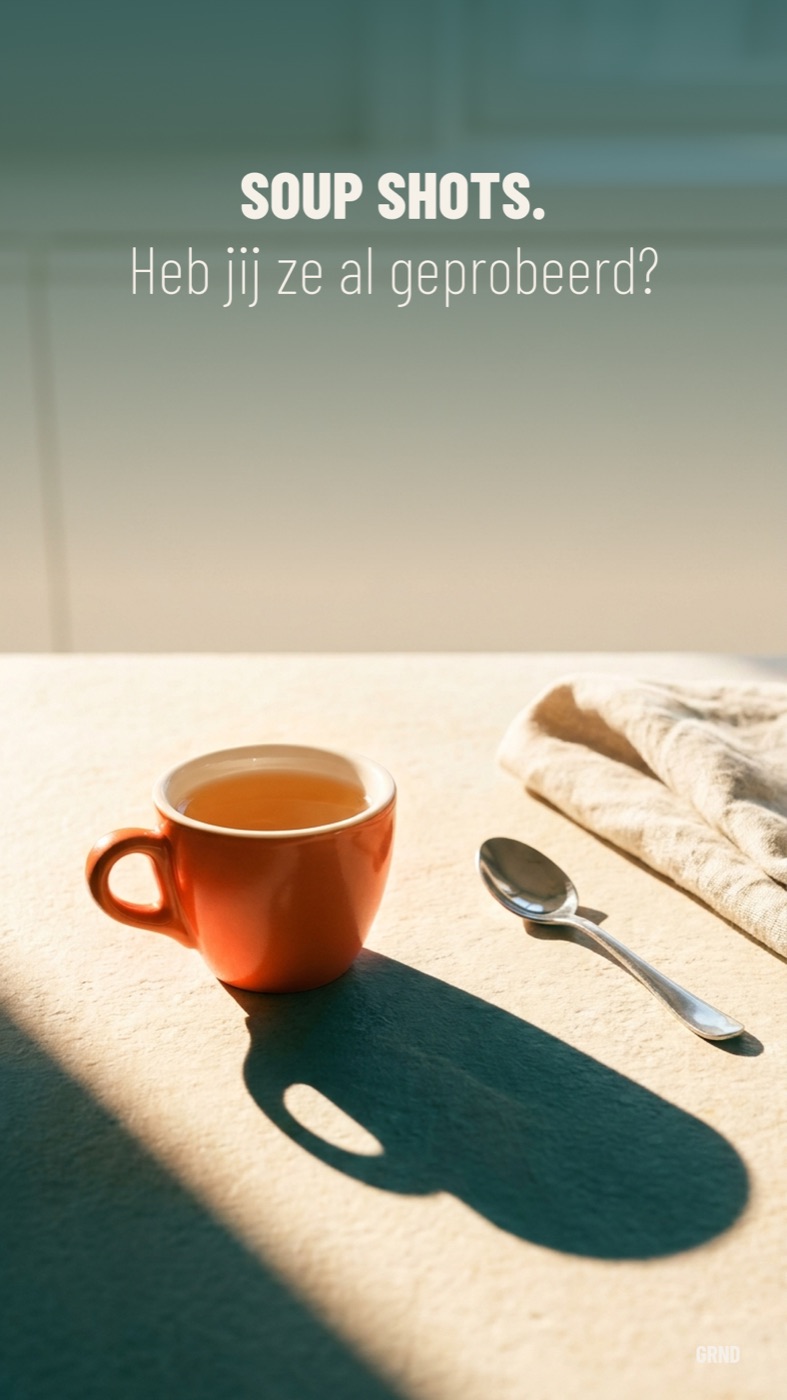
You’ve probably seen the name go by. Soup shots. They look different, they taste different, and half the coffee community swears by them. But what exactly are they — and should you be doing something with them now?
Short version: maybe. Here’s everything you need to know.
What a soup shot actually is
SOUP stands for Spro-Only, Un-Pressurized. That says it all: espresso without the high pressure.
A normal espresso pulls at 9 bar. A soup shot pulls at under 2 bar — sometimes even under 1 bar. The water runs more slowly and gently through the coffee. What comes out has a thin, clear body — more tea than espresso. Intense in flavor, but without the thick texture you know.
The ratio is different too. Espresso: 1:2 (18g in, 36g out). Soup shot: 1:3 or wider. More liquid, but not weaker. The clarity makes up for the thinness.
How a soup shot differs from a ristretto
Both look like “a small, concentrated coffee” — but they’re opposites of each other.
| Ristretto | Espresso | Soup shot | |
|---|---|---|---|
| Pressure | 9 bar | 9 bar | Under 2 bar |
| Ratio | 1:1 | 1:2 | 1:3+ |
| Body | Thick, syrupy | Round | Thin, clear |
| Grind | Finer | Standard | Coarser |
| Roast | Dark or medium | Medium | Light |
A ristretto is concentrated through less water. A soup shot is clear through less pressure. Completely different direction.
Which machine do you need?
This is where most home baristas hit the wall.
A standard portafilter machine pulls at 9 bar — that’s how they’re built. To pull a soup shot, you need to be able to lower that pressure. There are three ways:
Flow control. A valve or paddle you place between the pump and the group head. It lets you regulate pressure build-up live. This is the most accessible route if you already have a portafilter machine. Some machines have it built in.
Manual lever. A lever machine where you set the pressure with your arm. Maximum control, steeper learning curve.
AeroPress or OXO Rapid Brewer. Yes, really. Low pressure through weight, not through a pump. Surprisingly good results. This is the entry option if you just want to try it once.
Do you have a standard espresso machine with no modification? Then unfortunately it won’t work. You can’t regulate the low pressure a soup shot needs.
Which beans work best?
Light roasts. Washed processing. That’s the combination that lets soup shots shine.
Why light? At low pressure and high clarity, the subtle aromas and natural sweetness of light-roasted beans come through better. Dark roasts quickly turn bitter and unbalanced at low pressure — the caramelization that works at high pressure works against you here.
Why washed? Washed (wet-processed) coffee has a cleaner, clearer flavor profile. No fruity pulp notes clouding the extraction. That clarity is exactly what you want in a soup shot — the technique amplifies what’s already in the bean.
Gesha, Yirgacheffe, Panama: these are the names you’ll run into in soup shot discussions. Single origin, traceable, light roast. They cost more. They’re there for it.
When are you ready for it?
Soup shots aren’t hard as a technique. But they build on knowledge you need to have already.
Check this off:
- You consistently pull good shots on your current setup
- You know what to do when a shot runs too fast or too slow
- You know your ratios and measure them every time
- You have flow control, a lever or an AeroPress available
If you’ve got all of this down: try it. The risk is low. You’re using a coarser grind at lower pressure, so you can’t block a puck.
If you’re not there yet: get consistency in your normal extraction first. Soup shots show you exactly what your bean can do — but that’s only interesting once you already know what you’re looking for.
The order runs: dial in first, then refine, then experiment. Soup shots are step three.