
Terroir and processing: how the growing process creates flavor
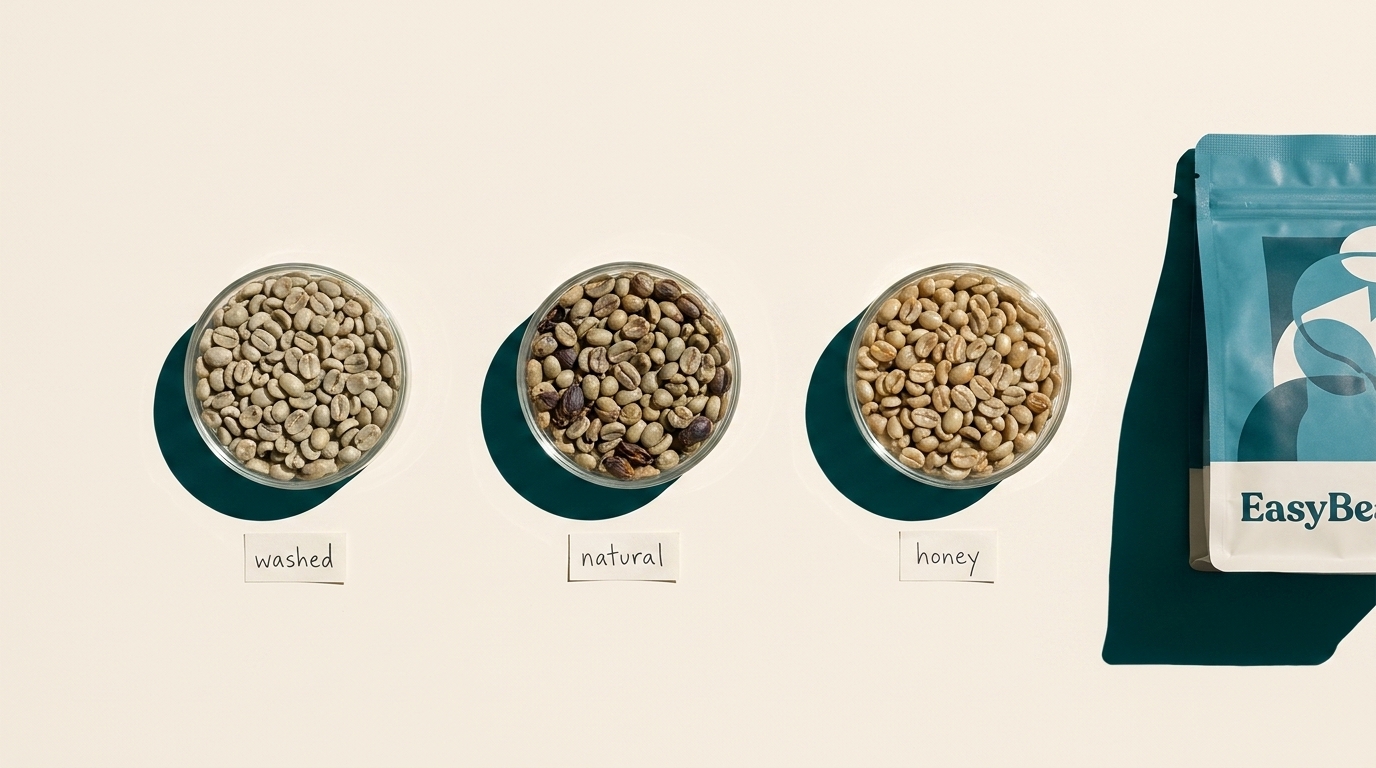
You may have wondered why two coffee beans of the same type can still taste completely different. The cause often isn’t the roasting, because that happens much later in the process. The basis for the flavor is already laid on the coffee farm, by the environment where the bean grows and the way it’s processed after harvest.
This article explains how those two factors, terroir and processing, determine the flavor of your coffee. Even if you haven’t read the rest of our guide on tasting coffee yet, this page gives you a good foundation to better understand the information on a bag of coffee beans.
Terroir: the place plays a part
The term terroir originally comes from the wine world, but it’s just as important for coffee. It describes the unique influence of the environment on the flavor. Think of a combination of the climate, the soil composition, the altitude and the local microclimate. An Ethiopian coffee tastes different from a Colombian one because of this, even when it’s the same plant species and the processing is identical.
Concrete factors have a direct influence. Volcanic soil, which is rich in minerals, influences the acid balance of the coffee, for example. The rainfall pattern determines the ripening cycle of the coffee cherry. And coffee that grows in the shade of trees ripens more slowly, which can lead to a more complex flavor. Terroir is the reason coffee from two neighboring plots in the same region can still have its own, unique character.
Growing altitude: the clearest factor
Of all the factors that fall under terroir, the altitude at which the coffee grows is the easiest to understand and has the most predictable influence on flavor.
At high altitudes the nights cool down more sharply. This makes coffee plants grow more slowly, giving the cherries more time to build up sugars and acids. The result is a bean with a higher density and a more complex flavor profile.
| Altitude | Label | Flavor profile |
|---|---|---|
| < 800 m | Low | A neutral flavor profile with low acidity. |
| 800–1200 m | Medium | A round and soft flavor. |
| 1200–1500 m | High grown (HB) | More complex and developed flavor notes. |
| > 1500 m | Strictly hard bean (SHB) | A dense, complex bean with a clear acidity. |
The logic behind this is simple. Colder nights make the coffee cherry ripen more slowly, which allows more time to develop complex sugars and acids. This ultimately leads to a denser, more flavorful bean. Countries like Guatemala, Ethiopia and Colombia produce a lot of coffee above 1600 meters, which partly explains why they’re so prominent in the world of specialty coffee.
Higher doesn’t automatically mean better, by the way. Growing altitude is an important signal for complexity, but it’s just one of many factors alongside the coffee variety, the processing and the roast.
Processing: the choice made after harvest
Where terroir and altitude are fixed by the location of the farm, the processing method is a deliberate choice by the producer after harvest. There are three main methods, each with a different effect on flavor.
Washed process. With this method, the fruit pulp is removed from the bean right after harvest. The beans are then washed and laid out to dry, which takes one to three weeks. Because the fruit pulp is removed, the pure flavor of the bean itself comes forward. This leads to a clear, clean flavor profile with a distinct acidity, in which the terroir is more clearly tasted. Kenya, Colombia and Guatemala are known for their washed coffees. The washed coffees from the Yirgacheffe region in Ethiopia are famous for their floral, tea-like character.
Natural process. Here the whole coffee cherry, including the fruit pulp, is dried in the sun. This process takes three to six weeks. During drying the fruit pulp ferments lightly, so the sugars and flavor compounds soak into the bean. The result is a coffee with pronounced fruity and sweet flavors, like tropical fruit, strawberry or blueberry, and sometimes even a wine-like character. These coffees generally have more body than washed coffees. The natural coffees from the Ethiopian regions Sidamo and Yirgacheffe are known for their complex fruitiness.
Honey process. This method sits between washed and natural. The skin of the coffee cherry is removed, but part of the sticky sugar layer (the mucilage) stays on the bean during drying. The more mucilage left on, the sweeter and fuller the final flavor becomes.
| Type | Mucilage | Flavor profile |
|---|---|---|
| White / yellow honey | Little | A lightly fruity and clean flavor profile. |
| Red honey | Moderate | More body with a soft sweetness. |
| Black honey | A lot | A rich flavor profile that resembles a natural. |
Costa Rica excels at the honey process. This method requires intensive supervision during drying, a technique Costa Rican producers have perfected.
Anaerobic fermentation: the new layer
A more recent development in the coffee world is fermentation in an oxygen-free environment. In the traditional washed process, the fruit pulp ferments in open tanks, where it comes into contact with oxygen. In anaerobic fermentation this happens in sealed tanks. The carbon dioxide gas released during the process pushes the oxygen out of the tank.
In this oxygen-free environment, other microorganisms thrive, which creates intense and sometimes unexpected flavor profiles with notes of tropical fruit, red wine or exotic spices. This method is popular in the specialty segment because it gives producers an extra instrument to steer the flavor. It’s also somewhat controversial, because some feel the dominant fermented flavor can overshadow the unique character of the origin.
This is a fairly advanced topic. You don’t need to understand this process to choose a good coffee, but it does explain why you sometimes come across beans with explicitly unusual flavor notes.
Why this all works at once
Terroir, growing altitude, processing, variety and roast aren’t separate dials you can look at individually. Instead, they influence each other and together form the end result. The flavor of a coffee bean is the sum of all these factors at once, not the result of one dominant factor.
A microlot is a perfect example of how traceable this process can be. This is a small lot of coffee from one specific plot, often less than ten bags in size, that’s processed separately to preserve its unique character. Where large cooperatives often blend coffee from dozens of farmers for a consistent flavor, a microlot preserves the specific signature of one place, one farmer and one harvest.
What this means for you as a buyer
You don’t need to be able to carry out this process yourself to benefit from it. This knowledge helps you interpret the information on a bag of coffee beans better before you buy it. If you see “washed, high altitude, Ethiopia” on the label, you can expect a clear, acidic and floral flavor profile. If it says “natural, Brazil,” the coffee is more likely to be sweet and full in flavor.
Want to apply this knowledge practically when choosing your next coffee? The article The flavor of coffee beans: what to look for helps you here with a concrete chooser.
Frequently Asked Questions
Is natural process always fruitier than washed?
Generally yes, but the intensity of the fruit flavors depends on the origin, the coffee variety and the care taken during drying. A well-controlled natural from Brazil, for example, tastes more often of chocolate or nuts than of pronounced fruit.
What’s the difference between honey and natural process?
In a natural process the whole coffee cherry dries, fruit pulp and all. In the honey process the skin is removed, but part of the sugar layer (mucilage) stays on the bean during drying. In flavor, the honey process sits between washed and natural. The rule is: the more mucilage left on, the more the flavor shifts toward a natural process.
Does terroir also influence the caffeine content?
The influence of terroir on caffeine content isn’t significant. Caffeine content is mostly determined by the coffee species (Arabica versus Robusta) and to a lesser extent by the variety, not by the terroir or the processing method.
Is higher growing altitude always better?
No, a higher growing altitude isn’t automatically a guarantee of better coffee. Altitude contributes to the development of complexity, but the interplay of terroir, variety, processing and roast determines the final flavor. A carefully processed bean from 1000 meters can taste better than a poorly processed bean from 2000 meters.
In closing
The flavor of coffee is therefore largely determined before the bean is roasted. The place where the coffee plant grew, the altitude and the choices the producer made during processing are all fundamental. This isn’t technical trivia, but the core reason why two bags of coffee of the same variety can still offer a completely different flavor experience.
Back to the hub: learning to taste coffee →
See also: The flavor of coffee beans: what to look for · Learning to taste coffee: the ultimate guide