How the brew method affects the flavor of your coffee
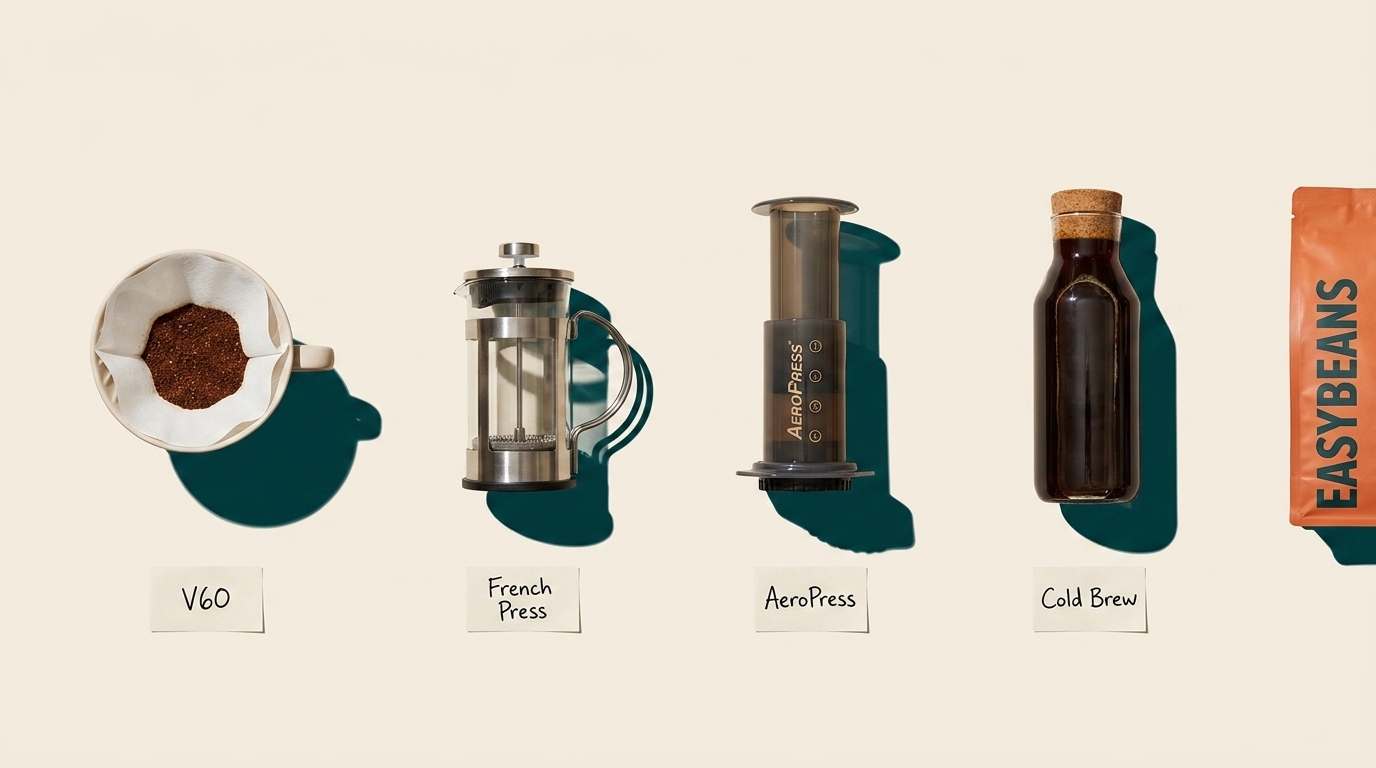
Before we go deeper, it helps to understand what a brew method actually is. A brew method is simply the way you turn coffee beans and water into a cup of coffee. Think of filter coffee, a French press or an espresso machine. The method you choose has an enormous influence on the final flavor in your cup.
The same coffee bean can taste completely different depending on how you brew it. That’s because every method pulls flavors from the bean in a different way. A paper filter, for example, holds back oils, while a metal filter lets them through. The choice of brew method therefore determines which part of the bean’s flavor potential you emphasize. This article helps you choose the right method for the flavor profile you’re after.
The overview in one table
| Method | Body | Clarity | Amplifies | Best with |
|---|---|---|---|---|
| V60 / pour-over | Low to medium | High | Fruity acids, floral notes | Light, single-origin beans |
| AeroPress | Medium, flexible | Medium | Versatility, forgiveness | Uncertainty, travel, experimenting |
| French press | High | Low | Fullness, oiliness | Full, nutty/chocolate beans |
| Cold brew | High | Low acidity | Sweetness, low acidity | Anyone wanting to avoid acidity |
| Espresso | High | Medium | Concentration, intensity | Balance of everything, in a small volume |
None of these methods is “better.” The question is what you want to taste from a specific bean.
V60 and pour-over: when you want to taste the bean itself
A paper filter holds back oils and fine particles. What’s left is a clear, light cup where fruity acids and floral notes aren’t masked by body. That makes the V60 less forgiving than an AeroPress. Small mistakes in grind size or pouring technique become audible right away. With practice, though, this method offers the most potential for a bean with a pronounced character.
Ideal with: light, single-origin beans from Ethiopia or Kenya, for example, where you want the acidity and floral or fruity notes to speak.
French press: when you’re after fullness
The French press doesn’t use a paper filter, but a metal mesh. That holds back coarse particles but lets coffee oils and fine particles through. The result is a fuller, oilier cup with more body and texture than filter coffee, but also with slightly less clarity.
Ideal with: full, nutty or chocolate-like beans (think Brazil or Sumatra) whose strength isn’t in a pronounced acidity, but in body and round depth. With these beans you lose little in a French press and gain body.
AeroPress: when you don’t have to choose
Deviations in grind size or water temperature stand out less than with espresso or pour-over. The AeroPress can be both clear and full, depending on the recipe you use. A fine grind with a short extraction gives fullness, while a coarser grind with a longer extraction gives clarity.
Ideal with: uncertainty about which profile you’re after, or situations where versatility and speed matter more than extracting the utmost from a specific bean.
Cold brew: when you want to avoid acidity
Cold water dissolves flavor more slowly and pulls out fewer sour and bitter compounds than hot water. The result is a sweeter, rounder flavor, even with beans that would come across sharper brewed hot.
Ideal with: a sensitive stomach, a preference for low acidity, or simply warm weather. Note: this works with almost any bean, but you do lose the floral and fruity clarity that same bean would show in a V60. More about cold brew is in the glossary.
Decision logic
Below are a few situations to help you choose the right brew method.
- For the purest flavor of the bean: If you want to taste the fruity and floral notes of a coffee bean as clearly as possible, a V60 or another pour-over method is the best choice.
- For a full body and texture: Looking for a full, rich flavor with lots of body, even with a simpler bean? Then the French press is ideal.
- For flexibility and experiment: If you don’t yet know exactly what you’re after or want a versatile method, choose the AeroPress.
- To avoid acidity: Have a sensitive stomach or simply don’t like the sour flavors in coffee? Then try cold brew for a soft and sweet result.
Frequently Asked Questions
Does the brew method change the bean itself?
No. The bean and its flavor potential are already fixed before you brew it. The brew method only determines which part of that potential ends up in your cup.
Can I brew the same bean with every method?
Yes, but the result differs greatly. A light, fruity Ethiopian shows its acids and floral notes in a V60. In a French press that same bean becomes fuller, but less clear. Neither is wrong. It’s simply a different experience of the same bean.
Which method fits a dark-roasted bean?
French press or espresso often work well. A dark roast naturally has less pronounced acidity and more bitterness and body. That combination benefits from methods that emphasize body rather than clarity.
Is espresso better than filter coffee?
No, just different. Espresso concentrates and balances all the flavors in a small volume under pressure. Filter coffee lets the bean unfold more slowly and clearly. The choice is a matter of taste preference, not a quality judgment.
In closing
The method doesn’t determine what’s in the bean. That choice was already made in the country of origin, long before the roaster gets the bean. The method only determines how much of it you get to taste. Once you know which profile you’re after, you also know which method brings it out best.
Want to know which bean fits which profile, before you even get to the brew method? The flavor of coffee beans: what to look for is the next step.
Back to the hub: learning to taste coffee →
See also: The flavor of coffee beans: what to look for · Learning to taste coffee: the ultimate guide