The ultimate guide to specialty coffee at home
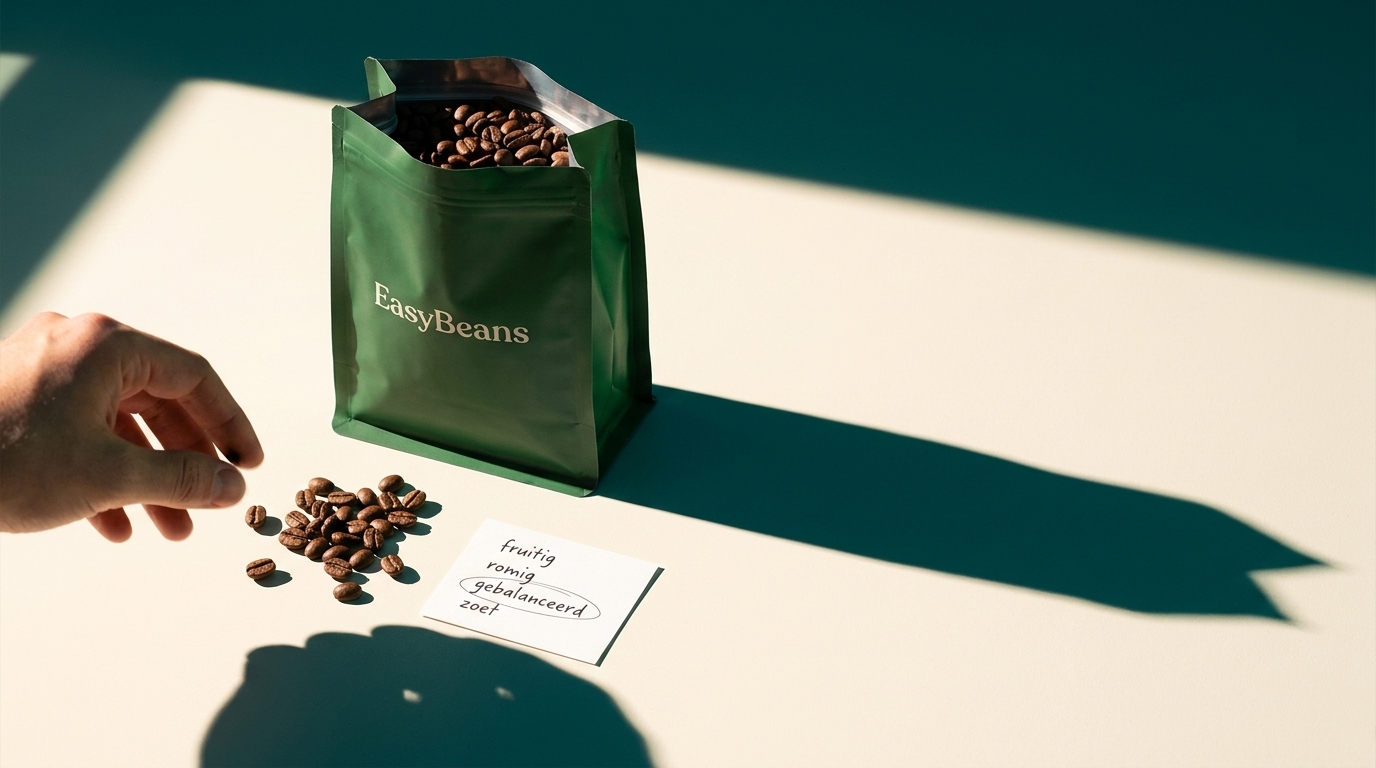
For most people, coffee is a functional morning routine. Press a button, a splash of milk, and on with the day. But once you make the switch to specialty coffee, that routine turns into an obsession. You discover that coffee doesn’t have to be bitter, but can taste of jasmine, bergamot, ripe strawberries or dark chocolate.
But with that discovery comes the frustration too. Why does one espresso taste perfectly balanced, while the next puckers your cheeks with sourness? In this guide we peel the coffee-brewing process back to its core. We let go of the assumptions and dive into the chemistry, the equipment and the variables you as a home barista need to get under control.
What is specialty coffee — and what are you actually buying?
The label ‘specialty coffee’ isn’t a marketing term; it’s a protected qualification. The Specialty Coffee Association (SCA) scores green coffee on a scale of 100. Only at a score of 80 or higher may it be called specialty. These coffees are characterized by extreme traceability and the absence of defects.
To make the right choices as a home barista, you need to understand how the journey from cherry to bean determines the final flavor in your portafilter:
- Washed: the coffee cherry is washed off the seed — the final bean — right after picking. This results in an extremely ‘clean’ flavor, where terroir dominates. Expect high, sparkling acids like citrus and green apple, and tea-like notes.
- Natural (unwashed): the cherry dries whole around the seed in the sun. The sugars from the fruit pulp ferment into the bean. This yields heavy, syrupy fruit bombs — strawberry, blueberry, fermented fruit — with lots of body and less sharp acidity.
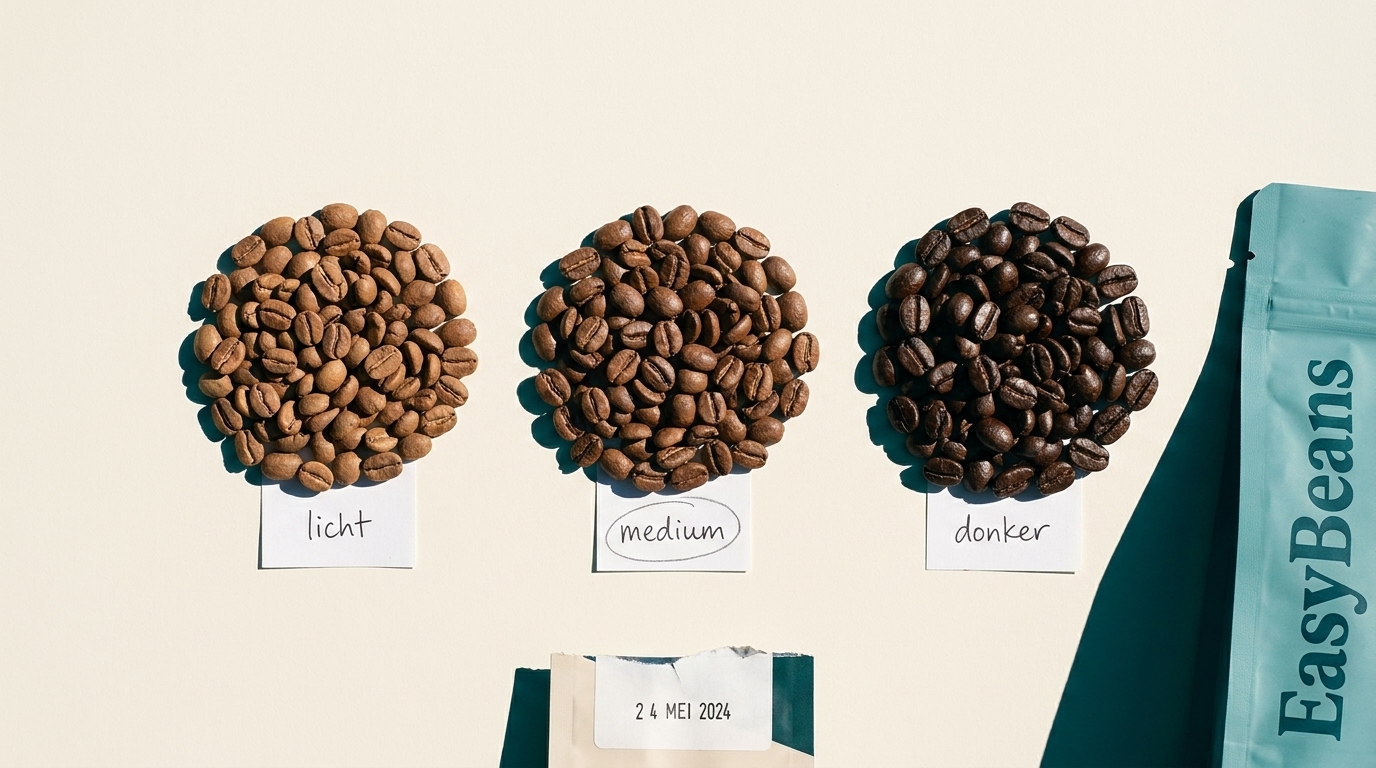
- The roast level: commercial coffee is often roasted extremely dark to mask defects. Everything tastes of ash and burnt caramel. Specialty coffee is roasted lighter to preserve the origin characteristics. The lighter the roast, though, the harder the bean is to extract — this requires better equipment and hotter water.
Want to learn to actually taste and name those differences? Learning to taste coffee: the ultimate guide covers this fully.
The foundation: understanding your equipment
Forget the shiny espresso machine with dual boilers for a moment. The hierarchy of importance in your coffee setup is a bitter pill for many beginners to swallow.
The coffee grinder: the king of your setup Your grinder is exponentially more important than your espresso machine. The goal of grinding isn’t simply to make the bean smaller — the goal is to create a uniform particle size distribution (PSD).
If your grinder has poor burrs, it produces ‘boulders’ (large chunks) and ‘fines’ (microscopic dust). During extraction, the fines extract immediately, causing bitter tannins, while the boulders barely take up water, causing sour under-extraction. The result is a cup of coffee that’s sour and bitter at the same time. Always invest your budget first in a grinder with high-quality, aligned burrs.
Read more: Flat vs. conical burrs: what do you actually taste?
The espresso machine: stability is everything A good espresso machine really only does two things: force water at constant pressure — usually 9 bar — through the coffee, and hold the temperature to the degree. Light roasts require water at 93°C to 95°C to extract enough acids and sugars. If your machine drops to 88°C during extraction, your shot will inevitably taste sour and thin. Look for machines with a PID controller.
The precision scale: cooking with data Working volumetrically — measuring in milliliters or with a scoop — is guessing. A scale accurate to 0.1 gram is essential. Crema consists largely of CO2 gas and varies in volume per bean and per day. 30 milliliters of espresso might weigh 15 grams today and 20 grams tomorrow. Without a scale, reproducing a good shot is impossible.
The science of extraction and dialing in
Extraction is the process where water pulls the soluble flavor compounds out of the bean. These compounds dissolve in a fixed order:
- Acids and salts (fruit notes, clarity) — dissolve first.
- Sugars (sweetness, body) — dissolve next.
- Plant fibers (bitters, tannins) — dissolve last.
An under-extraction (too short or too cold) stops at step 1: the coffee tastes sour, salty and harsh. An over-extraction (too long or too hot) pulls too much of step 3 along: the coffee dries out your mouth and tastes sharp and ashy. The sweet spot is the moment when the sugars balance the acids perfectly, just before the bitters take over.
The dial-in framework for espresso To find that sweet spot, use a fixed, repeatable method per new bag of beans. Never change multiple variables at once.
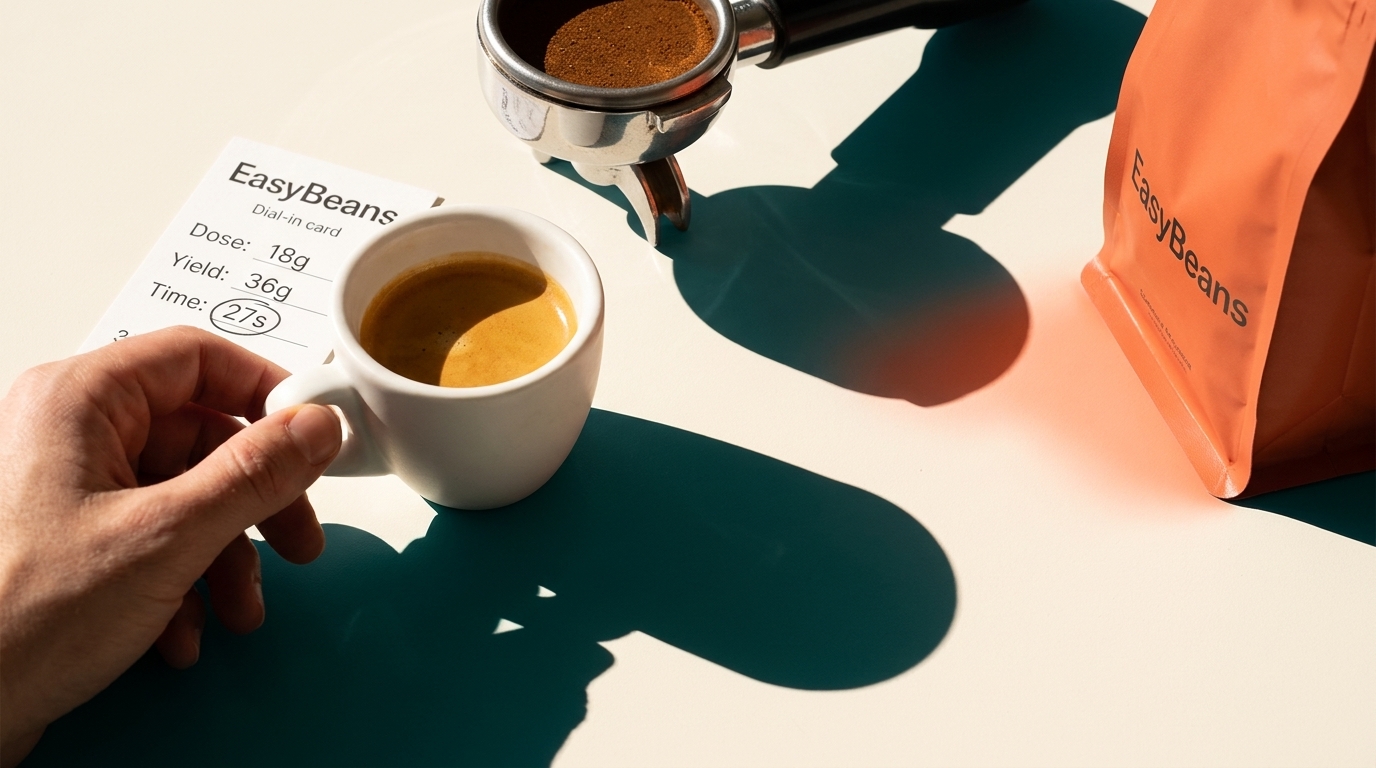
- Step 1 — Fix your dose. Decide what fits in your basket, for example 18 grams. Don’t adjust this weight again while dialing in.
- Step 2 — Set your ratio. A standard starting point is 1:2 — 18 grams of coffee in, 36 grams of espresso out. Too intense or sour? Widen the ratio to 1:2.5 for more sugars and balance. Missing body? Tighten to 1:1.5 for a concentrated ristretto.
- Step 3 — Steer time with grind size. You want to reach those 36 grams in about 25 to 30 seconds. Shot runs through in 15 seconds? Grind finer. Takes 45 seconds and only drips? Grind coarser.
The hidden variables: water and puck prep
Even with the perfect equipment and the right recipe, your extraction can fail through two often-ignored factors.
Water chemistry Coffee is 98% water. If your water is full of bicarbonate, like a lot of hard tap water, it acts as a chemical buffer that destroys all the pleasant acids. A light, floral Ethiopian coffee will taste like a flat, dusty supermarket bean with hard tap water. Filtered or low-mineral water solves most of this.
Puck preparation Water is lazy — under a pressure of 9 bar it always seeks the path of least resistance. If your grounds clump or lie unevenly in the basket, the water bores channels through them (channeling). Those channels over-extract, the rest of the coffee under-extracts.
Read more: WDT, RDT and puck prep: fluid dynamics in your portafilter
Frequently Asked Questions
What makes coffee ‘specialty’?
An SCA score of 80 or higher on green coffee, scored for the absence of defects and full traceability from cherry to bean. It’s a qualification, not a marketing term.
What matters more: the grinder or the espresso machine?
The grinder. A uniform particle size distribution determines nearly all of your extraction potential. A top machine with a mediocre grinder still delivers a coffee that can taste sour and bitter at the same time.
Why does my espresso taste sour?
Usually under-extraction: ground too coarse, flow time too short, water too cold, or too much CO2 in fresh beans. Adjust one variable at a time — start with the grind — and taste again.
How often do I need to adjust my recipe?
With every new bag of beans. A new roast date means a different CO2 content and therefore a different starting point for your grind. Pull two or three test shots before you lock in your recipe.
Do I need an expensive espresso machine to brew specialty coffee at home?
No. Temperature stability (preferably a PID controller) matters more than price. An affordable machine with stable temperature and pressure, combined with a good grinder and a scale, gets you further than an expensive machine with a bad grinder.
In closing
Brewing specialty coffee isn’t magic — it’s applied physics and chemistry. By isolating variables, measuring what you do, and steering the right elements like water and grind size, you have full control over the flavor in the cup.